Teaching English as a Foreign Language
Have you ever paid $2,000 to feel like you are getting kicked in the teeth mentally? Well, let me tell you about an exciting opportunity! The CELTA (Certificate in English Language Teaching to Adults) from Cambridge University intensive course is a great way to crack some eggs on your skull and see if they can be served as a beautiful omelette or runny scrambled eggs.
This is a long post. I didn’t have time to write while in Bangkok, so it’s all going to come out in one long wall of text. Sorry.
I have always wanted to get a certificate to teach English to adults since my college days. Some of my English major friends were talking about going to Prague and getting a certificate and living in Europe and whatnot. I elected to get a customer service job and start my “career.”
Like the yoga teacher training course, my goal this year while not working a regular job was to get an English language teaching certificate. It appears that the CELTA is the highest level of certificate available, so of course that was the one I wanted. Even if I don’t teach English in the near future, I wanted to get the certificate just to have it when I needed it.
I do want to teach some English classes in Hanoi. The pay and hours are pretty terrible, so I would do it as a way to give back to the community that has welcomed us so warmly.
Like most things in Vietnam, the English teaching industry has a dark side. Some expats with little experience or teaching knowledge use the job to maintain a visa status while engaging in questionable lifestyle choices far away from home. You can basically get a Groupon for a TEFL (Teaching English as a Foreign Language) certificate and do absolutely nothing to earn it. But, you probably won’t get hired at a “good school.”
There are unaccredited schools welcoming the type of people above, or fresh young faces who just graduated college looking to live abroad. Once the contract is signed, the school will bait ‘n’ switch the position, pay, hours, benefits, and/or materials and resources offered. Some schools require the employee to hand over their physical passport for an unknown amount of time, claiming it is required by the Vietnamese government. If the employee complains, the school threatens to cancel the work visa or refuse to return the passport, which puts the employee in jeopardy of deportation or a nice stay in a Vietnamese prison. There is a Facebook group dedicated to listing shady English centers and schools to try to help newcomers avoid getting jobs there.
Having a college degree and a strong certification like CELTA helps to get a secure job at a good school with resources and materials.
CELTA course Bangkok
Looking online, I didn’t see any CELTA courses available in Vietnam. I found one in Phnom Penh, Cambodia, so I did their complicated preliminary test and applied. Shortly thereafter, I got a notice they were canceling that course and I could go to Europe or the United States instead. I was trying to do this course on the cheap so that wouldn’t work. I did another complicated test and application for International House, Thailand, Chang Mai, which led to an interview to assess if I could be admitted or not. I felt like I did terribly in the interview, but they let me in anyway. How do you teach beginners the difference between shy and embarrassed without using a lot of English??
Something to note is I clarified the course class time is 120 hours, and then to expect 60 – 80 hours of homework and study time for the month. The interviewer confirmed this information, so I was like, OK, I can handle that. Oh ha ha. Unfortunately, the amount of time needed was woefully underestimated. (I think it was about 275 hours total for the month for me)
The Chang Mai course is conducted in a resort-like setting with a pool, rooms, kitchen, and classrooms all on the same grounds. I was looking forward to getting out of Hanoi to the serene mountains of beautiful Chang Mai. Well, they canceled that course and gave me the choice of waiting until some unknown amount of time, or going to Bangkok instead. There was a page on the website dedicated to the Bangkok school and accommodations, as well as tourist attractions, as if you would be able to see any of them.
Accomodations in Bangkok: The KV Mansion

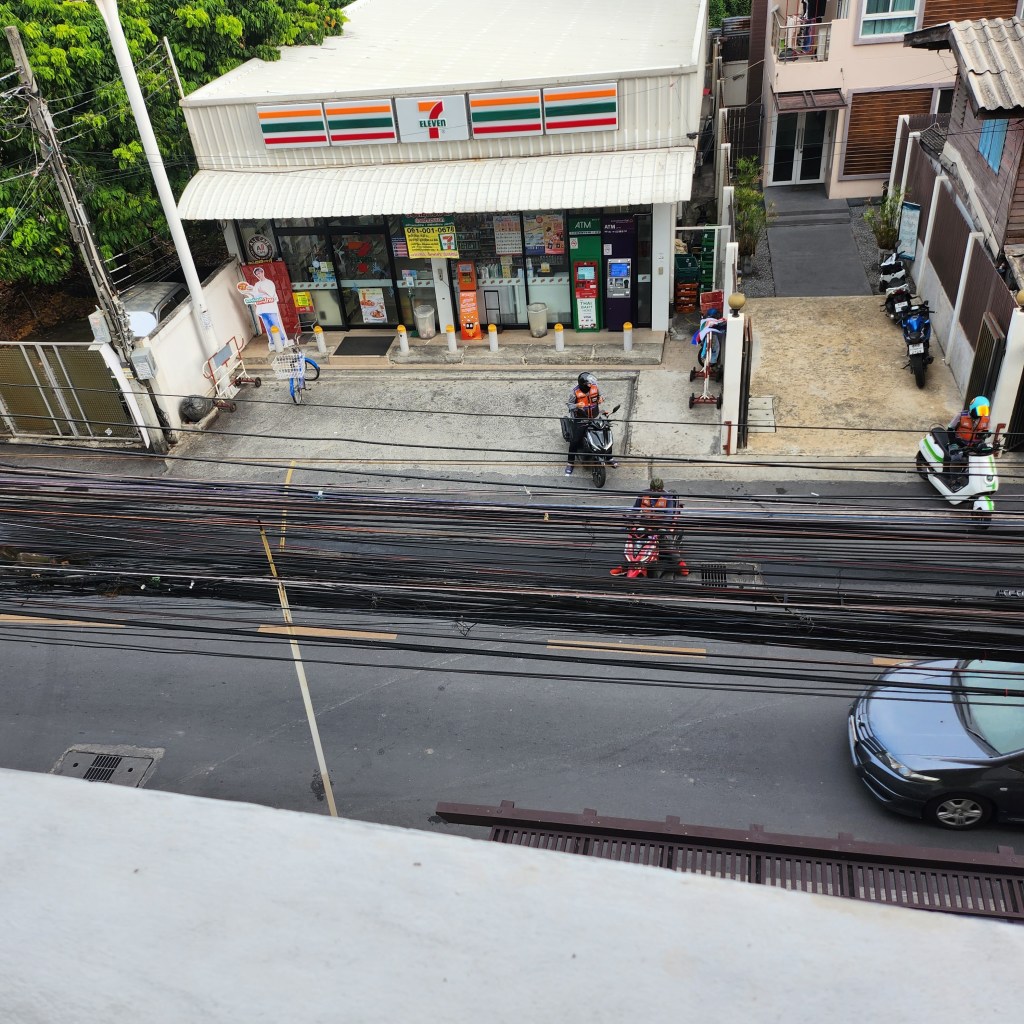
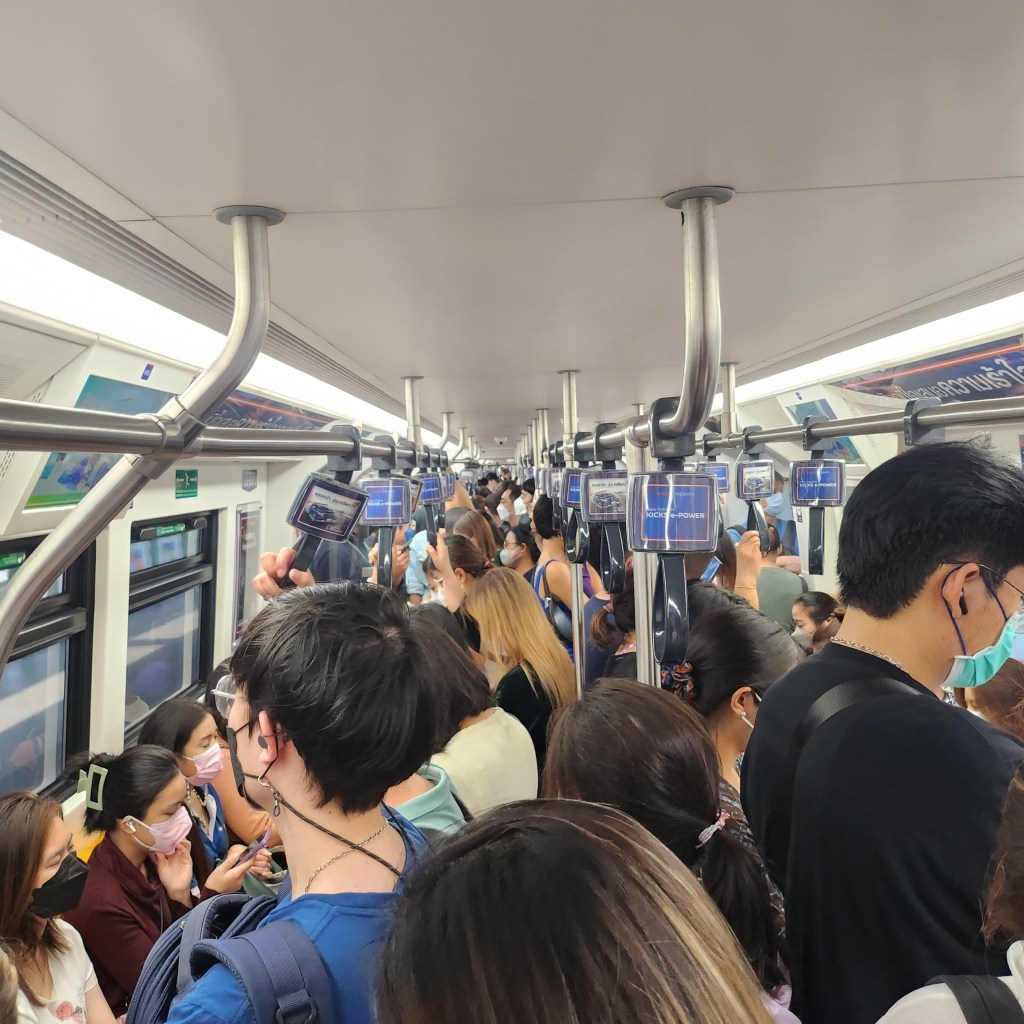
The hotel was about 12 km away from the school. About 20 – 25 minute commute by skytrain. The hotel was simple, and my room was on the third floor above a very busy street. The bathroom window was basically just a screen so it sounded like the motorbikes were driving right through my room. Niceties such as hangers in the closet, a hair dryer in the bathroom, a safe for valuables, and a bowl for eating were not appointed. And of course, I couldn’t get on the wifi.
I had to leave for school at 8am and would return at 7pm, which was just outside of office hours, so I couldn’t ask about anything for a few days. I used noise canceling headphones and a mobile hotspot to get some schoolwork done. Eventually, I got to move rooms and connected to the wifi.
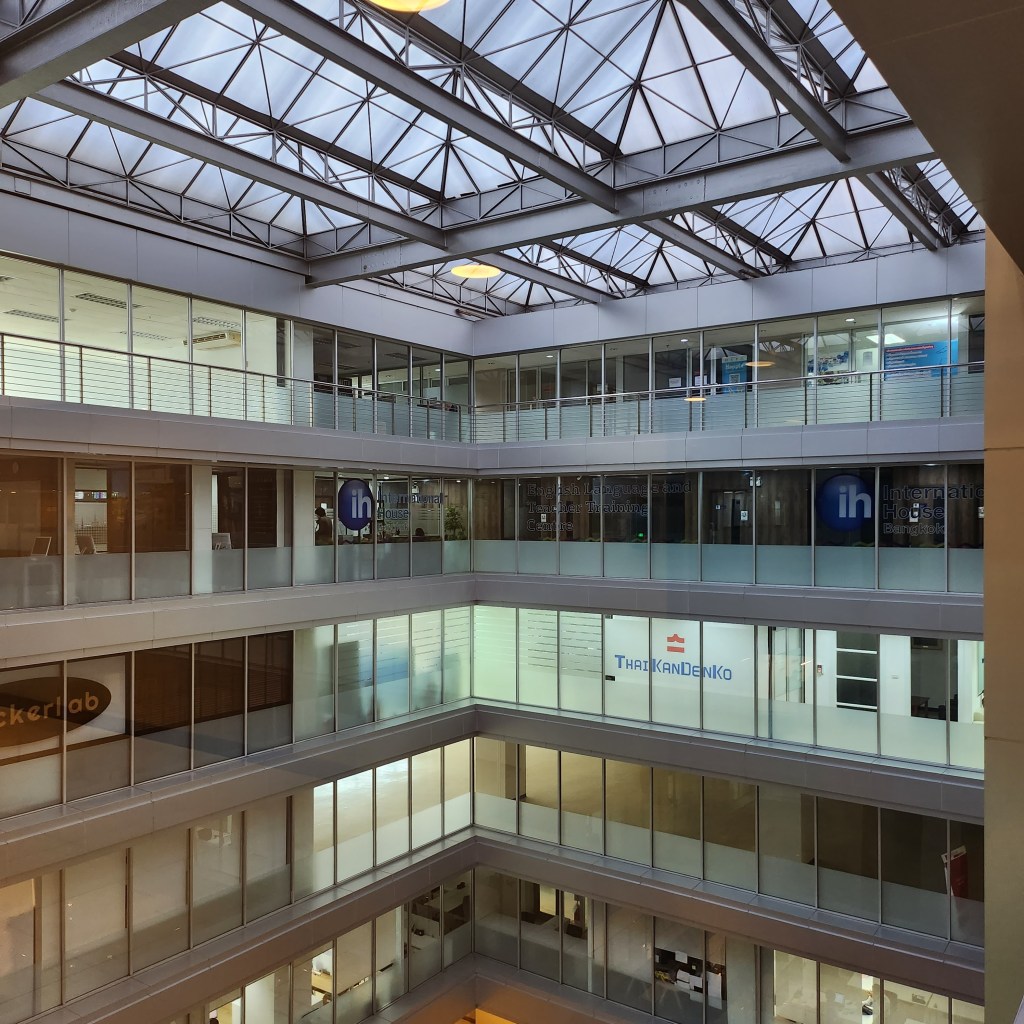
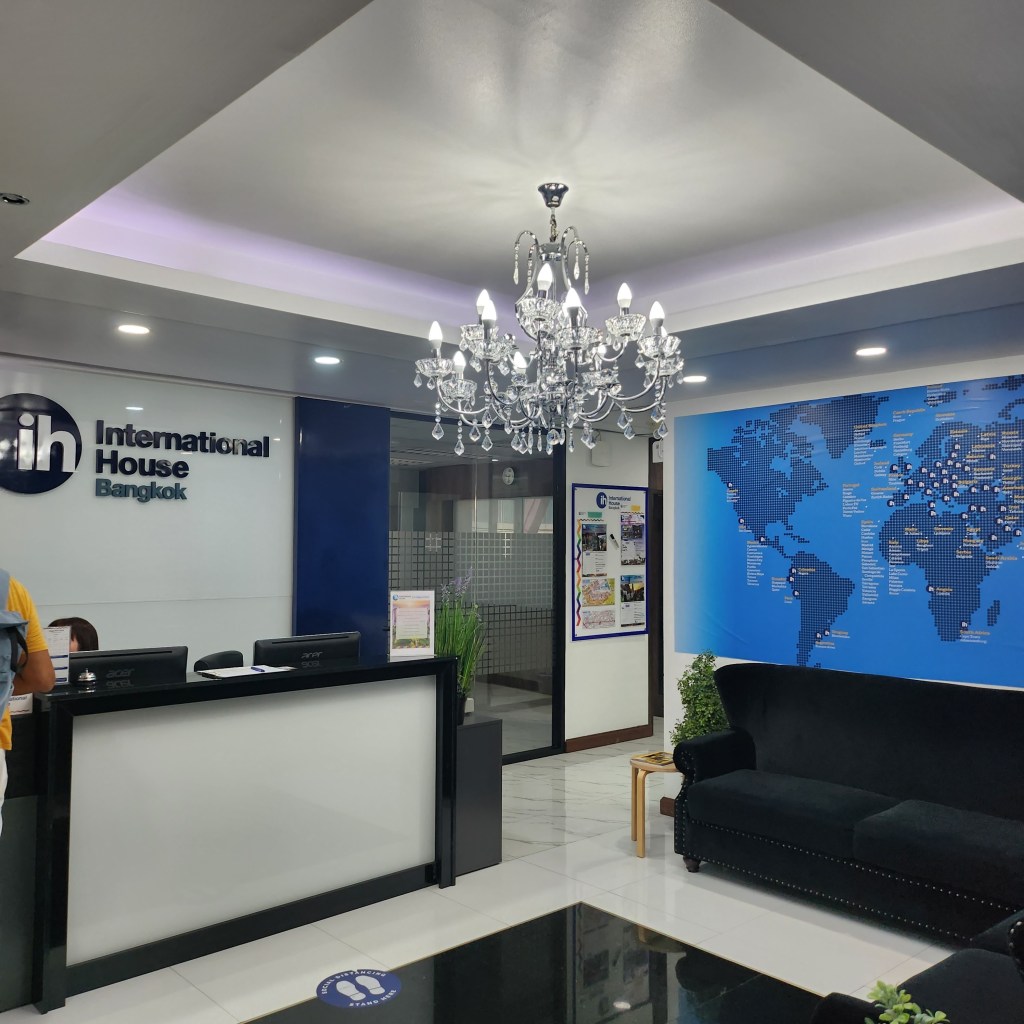
Bright-eyed and bushy-tailed
The first day of school felt like getting punched in the face. There was a brief icebreaker where we learned each other’s names and a little bit about each other. Then it was down to business, groups were established and then it became clear that I would be teaching a lesson to real students the next day (day 2). This meant I was expected to put together slides (or a whiteboard plan) to teach a grammar lesson about the verb To Be with some touches on questions and answering in the positive and negative. The slides were due at noon the next day and my class was at 2pm. There was a brief 20 minute advice session on where I should look to see how to plan my lesson, where the education materials were, and to just go ahead and figure it out. We were released at 6pm that evening, I got a quick dinner, and went to my room and put together something for the next day, but I had questions so it wasn’t finished.
On day 2, we had class at 9am and when I realized we would be in class until noon, I asked my teacher when I would have time to work on my lesson for today. He looked at me incredulously and said, “You should have done that last night.” I responded, “Well, I worked on it until 10 o’clock, but I have some questions and it’s not quite finished.” He was like, well you’re basically outta luck because we are in class now and you can’t work on it and then we don’t have time after this class to help you before your lesson. Honestly, that set the tone for the course. You’re on your own, figure it out.
They gave us access to Google Classroom, where there were a hundred files nestled in various folders with names that sounded vaguely similar like Detailed Lesson Plan Framework, Lesson Plan Guide, and Lesson Plan Templates. If we asked a question, the answer would often be dismissed with, It’s in the Google Classroom. Also, they didn’t use the Assignments feature of Google Classroom so keeping track of what we needed to turn in on what date was not necessarily straightforward. To “turn something in”, you just put it in a shared folder on your Google drive and let it sit there until the teacher looked at it. The whole system was a bit confusing…and I’m a native English speaker. So, consider how my classmates who spoke English as a second language (or fourth) might have been feeling. Also, we had one student who had never seen the Google platform at all before. They don’t use it in their country I guess.
Needless to say, my first lesson on the second day of school was not my proudest moment, but it went OK. I think I disassociated because I barely remember it at all.
Long Days with Sad Food
The course schedule worked like this:
- 9am – 12pm Input class (us learning stuff)
- 12pm – 1pm ALP (assisted lesson planning for people teaching the next day, if you were teaching that day, you got no assistance)
- 1pm – 2pm Lunch (heh, yeah right)
- 2pm – 4:30pm Teaching practice (teaching real students English with five of your peers and a teacher scrutinizing everything you did)
- 4:30 – 6pm Teacher feedback on how the lesson went
We did eight teaching practice lessons at 45 min a piece, and there were four written assignments. The first writing assignment took me the entire weekend. I didn’t leave my room except to take myself out to dinner in a real restaurant and have a Thai massage on Saturday night.
(Side note: Thai massages are my favorite. Vietnamese massages are great, but I like Thai massages just a little bit better. The expensive one at the cheap place I went to was about $15. Sometimes I would get the $7 one instead if it was just a week night treat, like the time my teacher ordered me to take a night off from homework because I looked exhausted and was on the verge of crying because I finished a lesson with my students talking about their dream jobs and the excitement they had about their dreams made me emotional.)
Mostly, my Bangkok experience was: hotel – metro – school – cheap fast dinner – hotel, with an occasional visit to the massage parlor. I ate granola in my room for breakfast and PB&J sandwiches for lunch. I know it’s a damn shame. Thai food is my favorite food, but with a vegetarian lifestyle, I couldn’t just grab food from any of the thousands of food stalls around as all they had mostly was meat on a stick.
Out and About
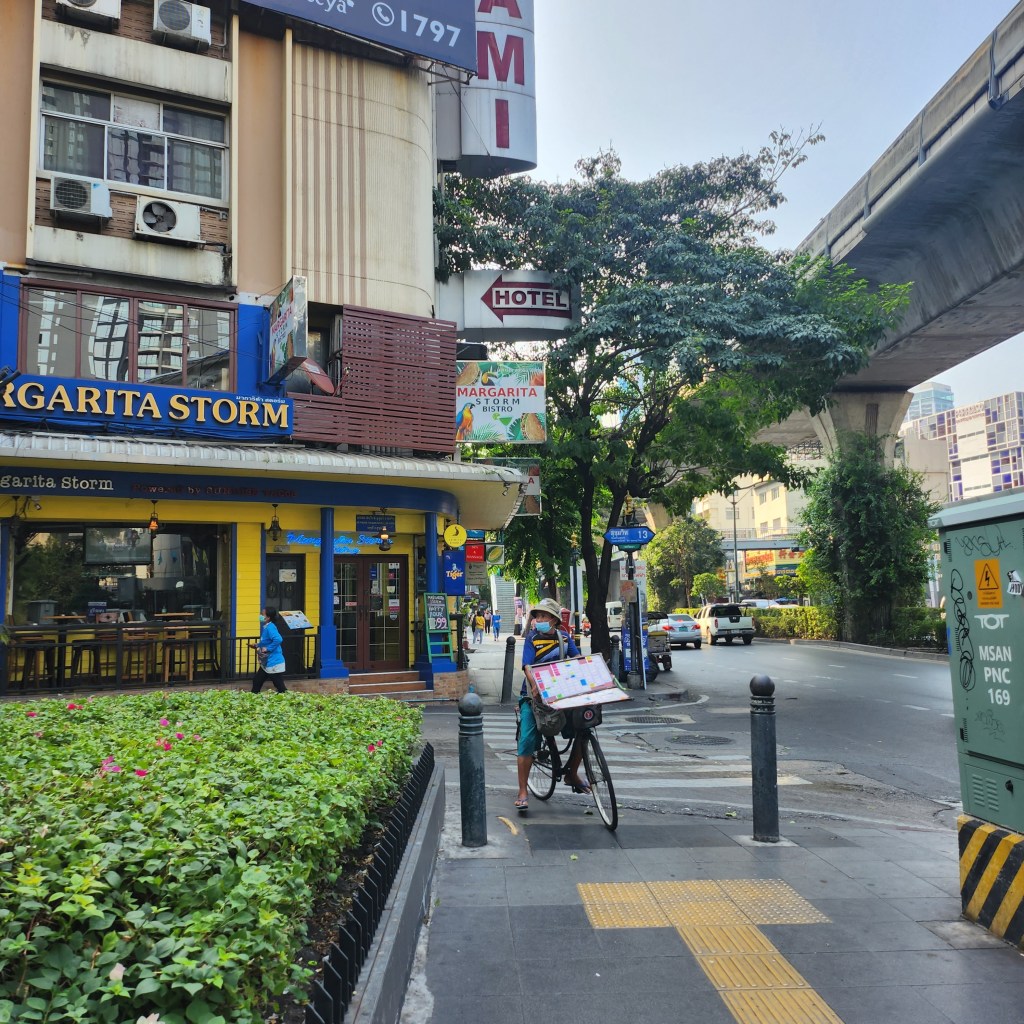
When I did get a little time, I would walk around a little. I only have a few photos because I didn’t get out much AND my phone screen went completely black halfway through the course rendering it useless until I got back to Vietnam.
Also halfway through the course, we were invited to watch one of our students sing at a bar AND we were mercifully given a Friday without classes so we went to blow some steam.
I was surprised to find out when I arrived that it was a trans-woman bar (aka ladyboy bar). There are a lot of transwomen that I could see in Bangkok. I looked up why and I read that there aren’t really more than other places, but they are just more visible. It was chalked up to the sex work legacy instigated by the US during the Vietnam War and the dogma of Buddhism which recognizes some fluid or non-binary gender ideas and is like, any sex is a sin and nothing is worse than anything else, so people are like, well I might as well just go for what I want.

I went with a classmate to the Zoo Cafe where you can pay $9 for an hour with about a billion corgis or go to the other rooms with the small dogs, cats, foxes, lemurs, and I think a friggin raccoon. I stayed in the room with the small dogs and cats. I made friends with a Chinese Crested and a Papillon Chihuahua (I think?).

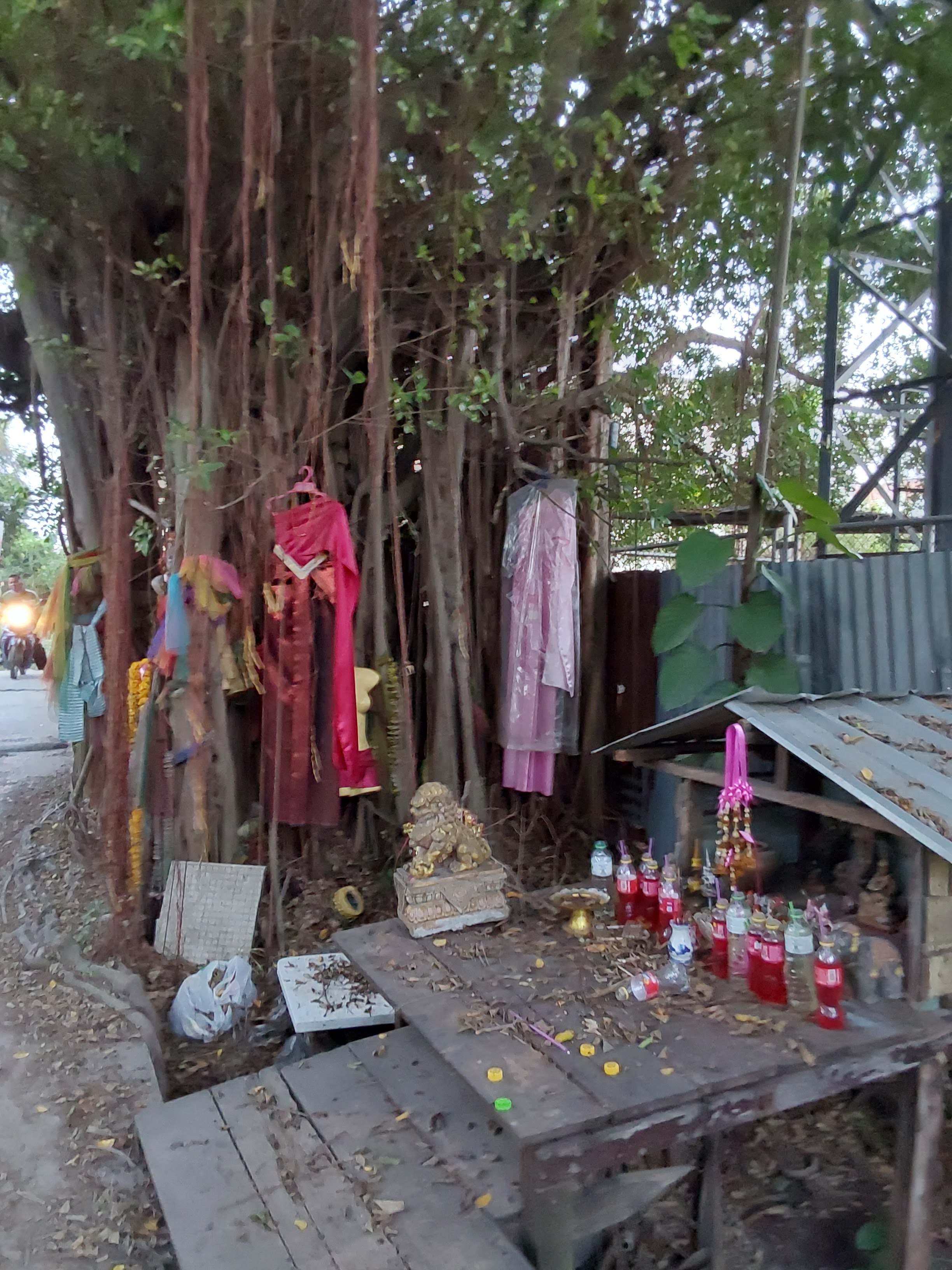
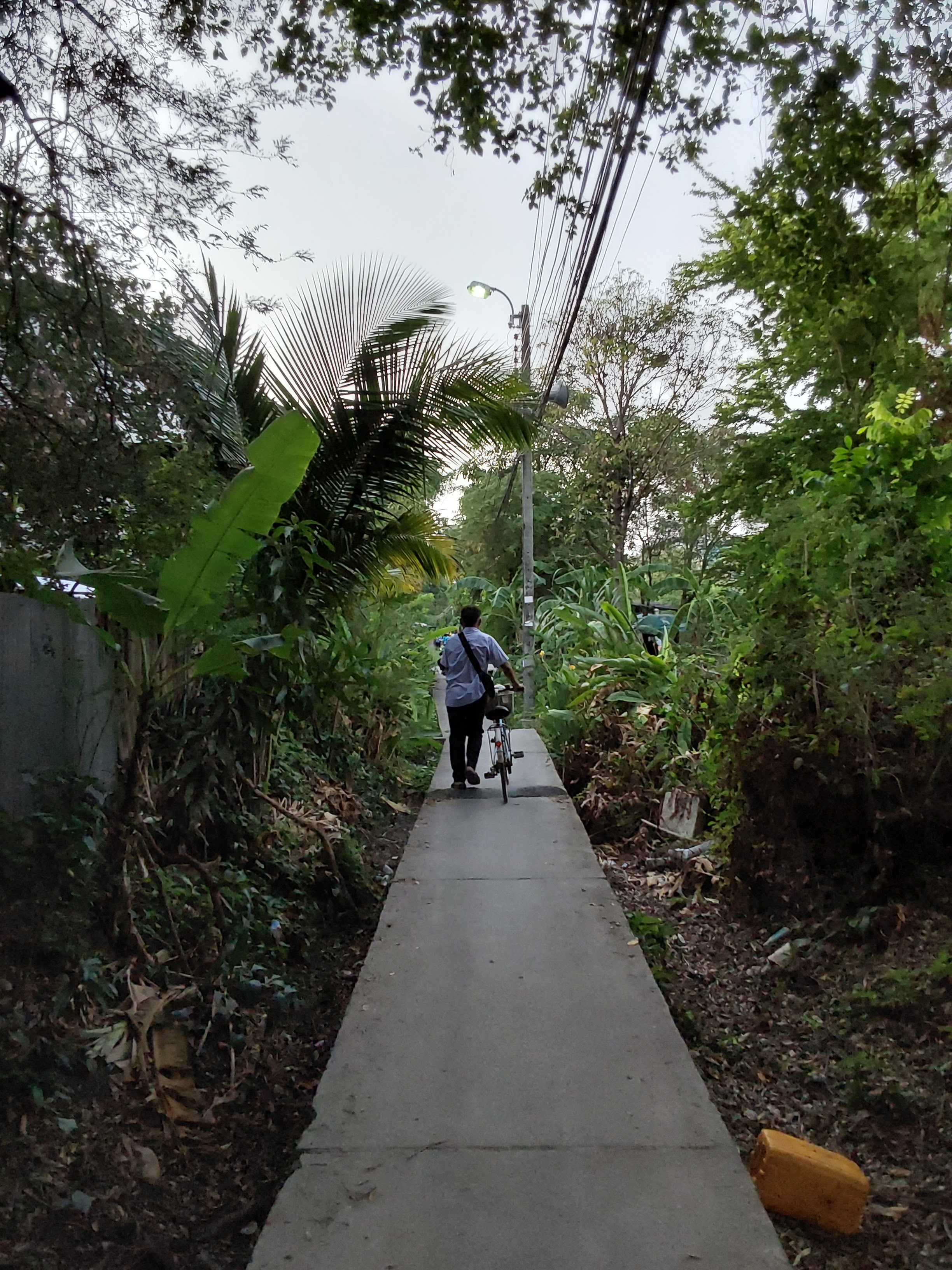
I found this charming little road/trail by the canal walking south. I don’t know what the costume tree is about.

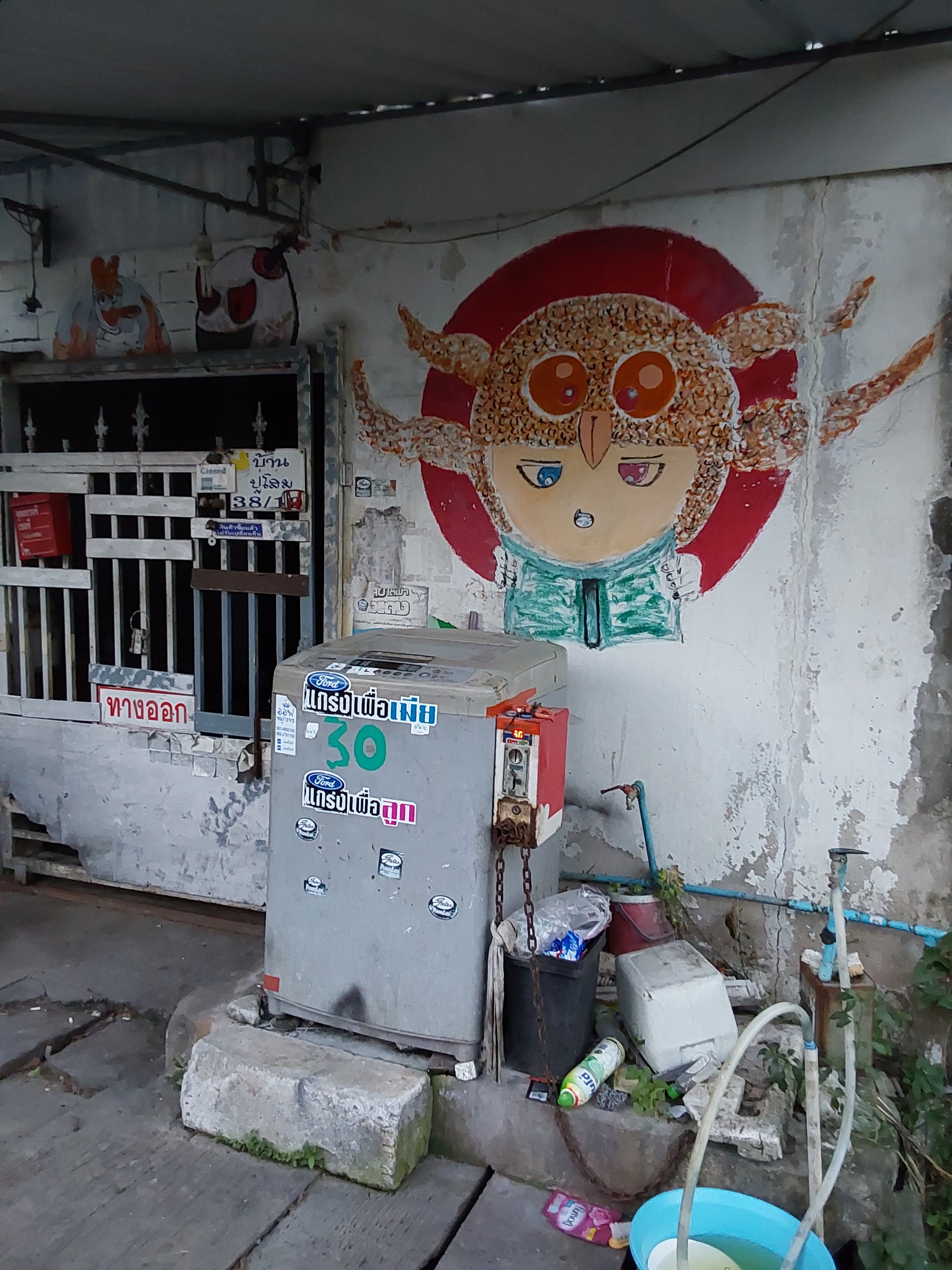
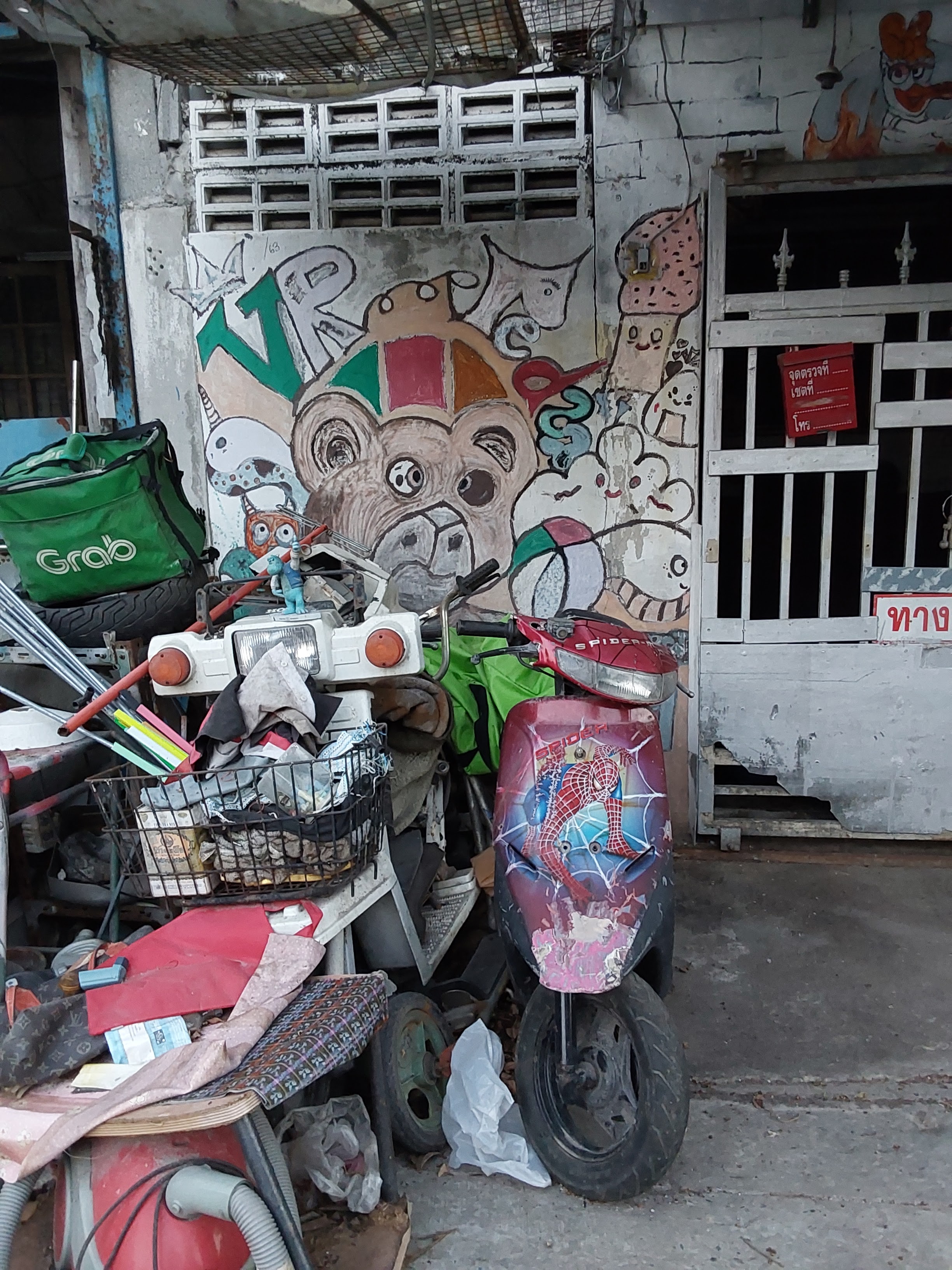
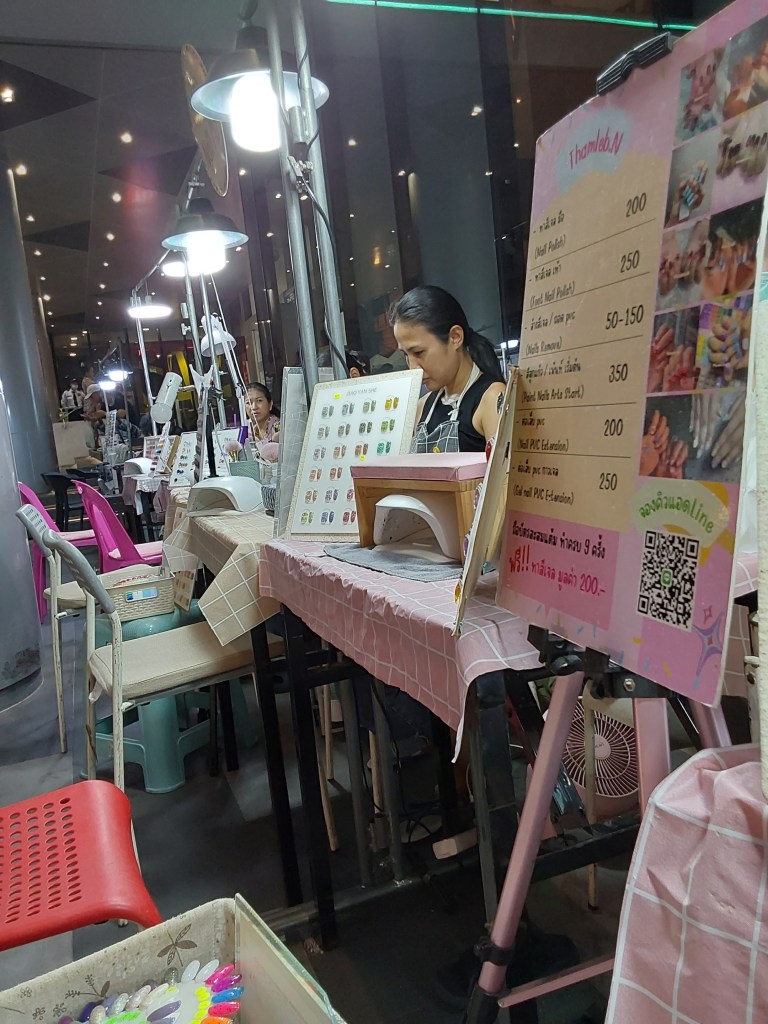
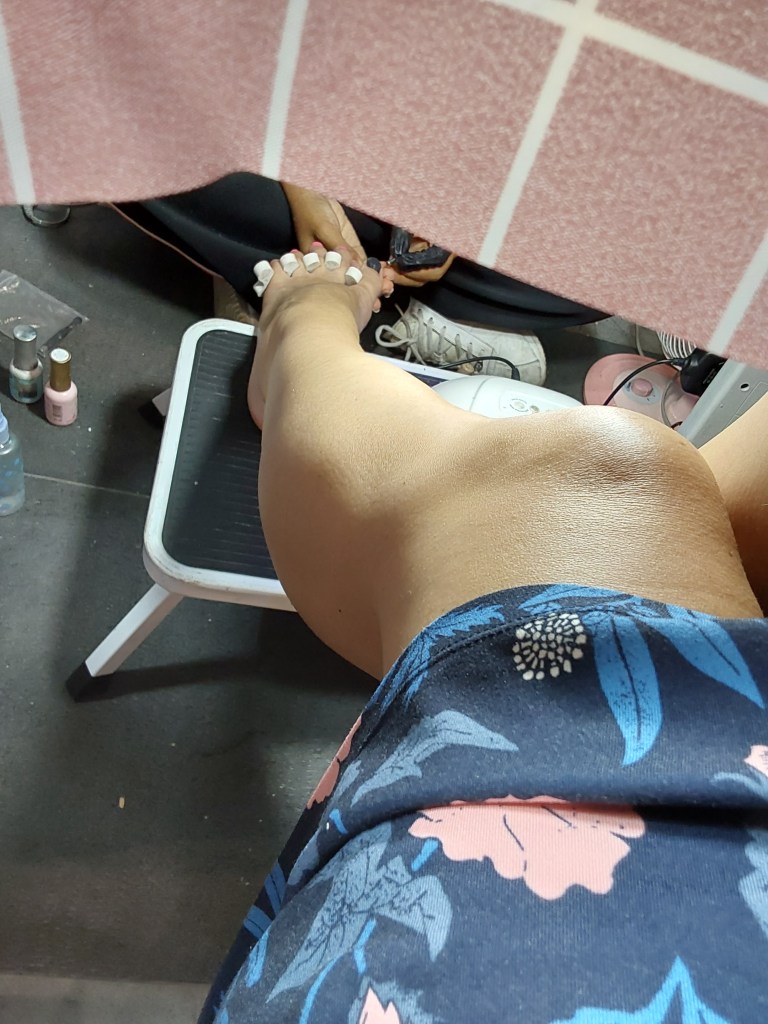
Street mani-pedi services are very common in Bangkok:
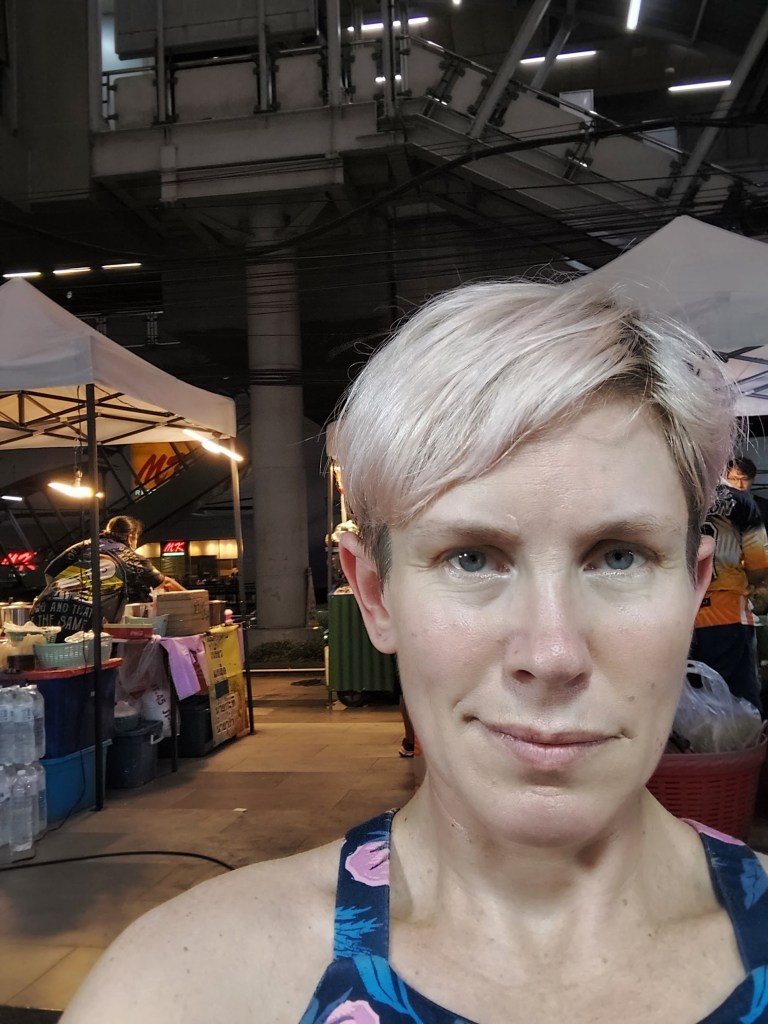
I didn’t get to watch a lot of TV, but when I turned it on, I liked to watch this channel that had like a Thai opera on 24/7. I think it is called Likay.

Durian Dunkin Donuts. If you don’t know, Durian fruit is well loved in Asia, and it smells so bad it is forbidden from most hotels and apartments. I personally think it is disgusting.

The People

Despite the rude awakening about what I’d signed up for, I want to say that our two teachers (they call themselves tutors) were incredibly knowledgeable and knew an immense amount of information about language acquisition and teaching. One had a PhD in linguistics and the other had been in the CELTA program for a long time. They taught our classes using the CELTA framework and strategies, so we could experience how it worked. They both cared deeply about our success as well as the success of our students.
There is a great emphasis on involving the students in their learning. There is very little “chalk and talk” as they call it. The tactics involve guided discovery by the student and the teacher asking questions, usually this or that and yes or no questions to make it easier on the student to answer.
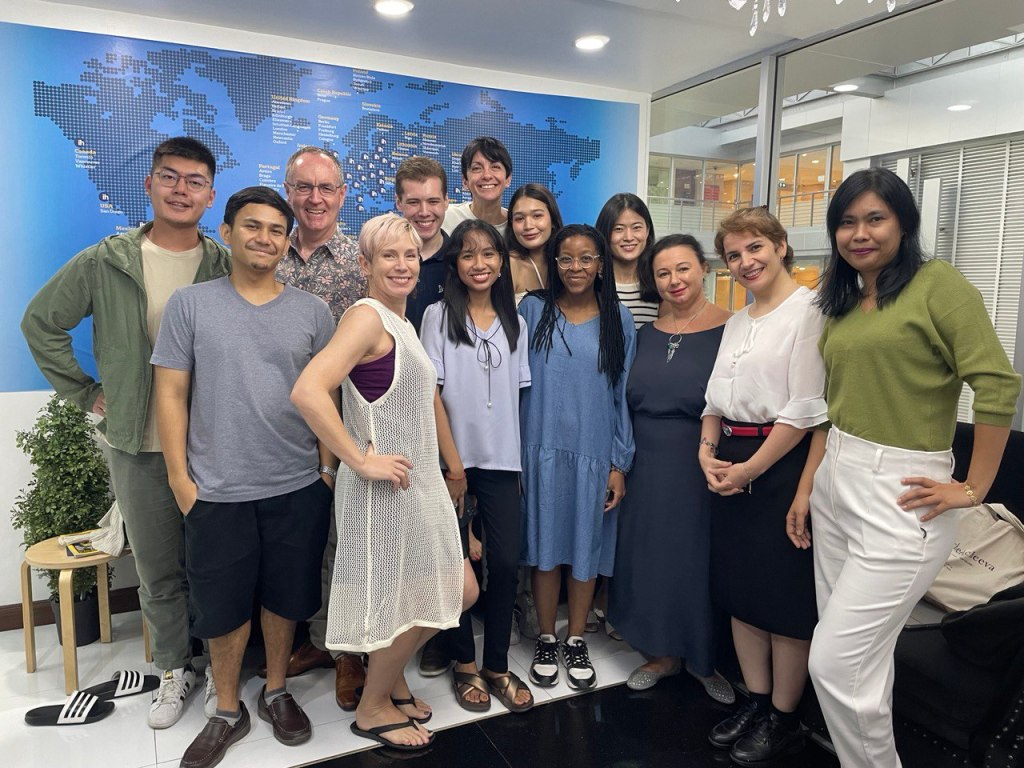
My peers were from different countries with different reasons for getting a CELTA certificate. We had two people from England, two from China, three from Myanmar, one from Iran, one from Italy, and three-ish from USA (two red blooded Americans, and one that lived her life abroad so even though she has the passport, she doesn’t identify with the culture).
Most of us from the West were there as a way to try something new. The folks from Myanmar were there for a better chance at getting a ticket out of their country. They have electricity four hours a day, and traveling anywhere at night or anytime outside the city could result in being kidnapped or murdered.
From what I have heard, the opportunities for English teachers varies wildly between native speakers and non-native speakers. Usually, the native speaker is paid more than the non-native speaker. But, after watching everyone teach, I assure you, the non-native speakers know a lot more about English than the native speakers. Look, I have an English degree, and I was terrified to talk about verb tenses because I don’t really know much about it. I watched my foreign counterparts run circles around past perfect and past participle, breaking it all down for the students to understand.
The opportunity for non-native speakers divides again by nationality. A southeast Asian English center is much more interested in a non-native speaker from Europe than from Myanmar (Burma). I don’t have sources and data to cite about this, it’s just what I’ve seen and heard in my short time getting familiar with the industry.
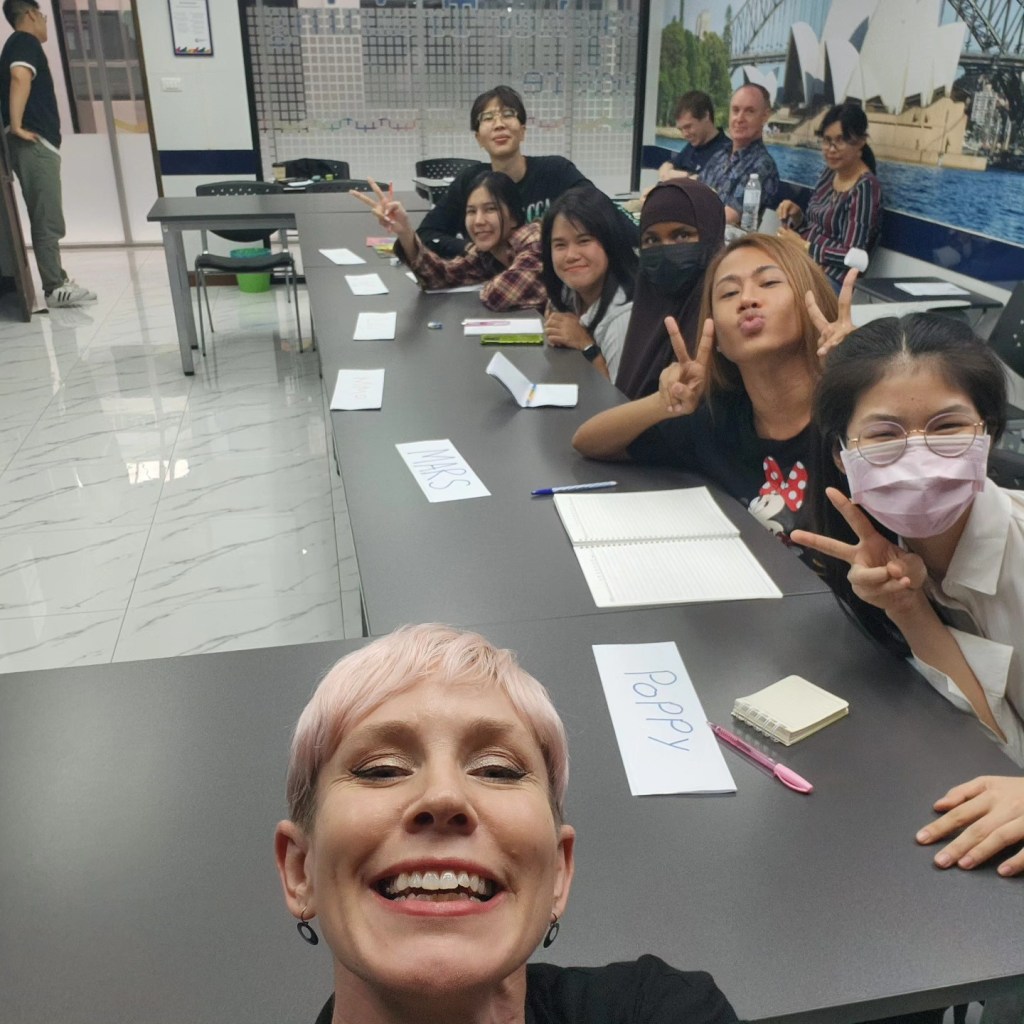
The Elementary level students were mostly Thai, with a couple of Somalians. The Intermediate level students were from Thailand, Somalia, Afghanistan, Iraq, and Sri Lanka.
The class was young: teens through 30’s. Many are interested in media and domestic work/hospitality. Most are wanting to communicate with a partner or community, and better understand English language pop-culture. Others are wanting to get a job in an English-speaking country.
Glad to be Done
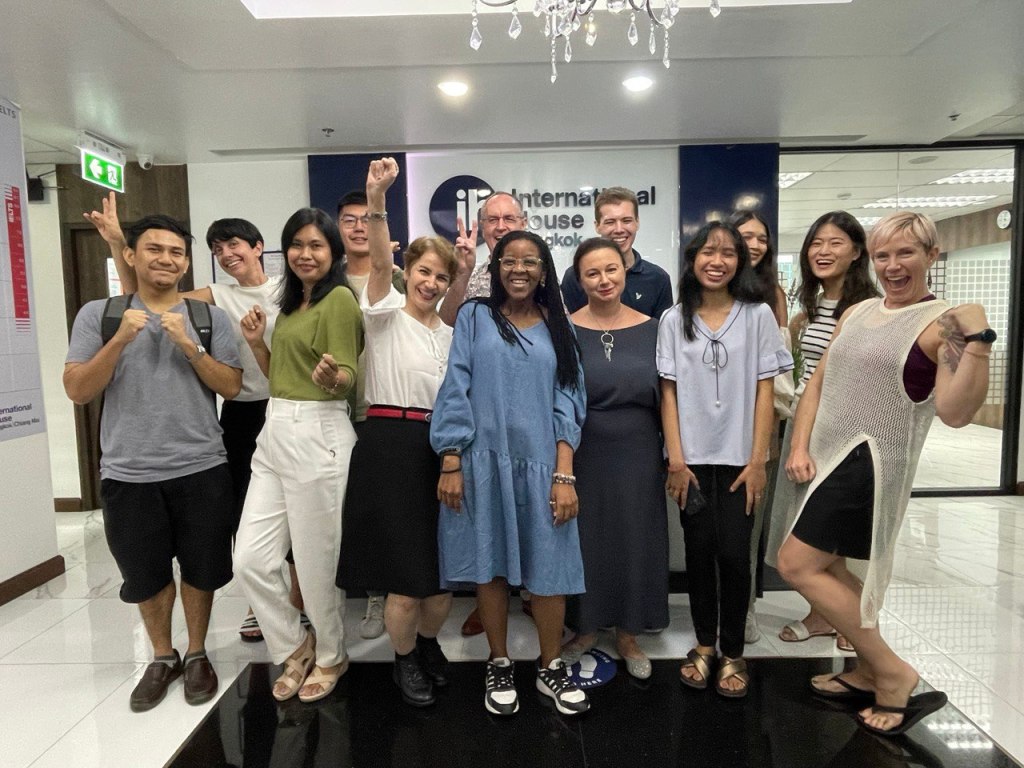
Am I glad I did it? Yes. Am I glad to be done? Yes. Did I get what I paid for? Yes and then some. About 10 days into the course, we learned that a student had come into the school to tell them they had COVID so they weren’t coming to class. This action caused a mild panic and everyone wore masks for the day. I asked, “What happens to my course if I get COVID?” They told me it would be suspended and I would have to come back to the next session and start again. I wore a mask all day everyday for the rest of the course because I felt like if I had to come back later, I just wouldn’t.
At this moment, I have a provisional grade of “Pass B” which I understand is better than just “Pass”, but also it sounds like employers don’t really care either way. Some people in my group wanted nothing less than a Pass B and some like me just wanted a certificate. But, I can always put it on the resume as a distinction.
 Casey Space
Leave a comment