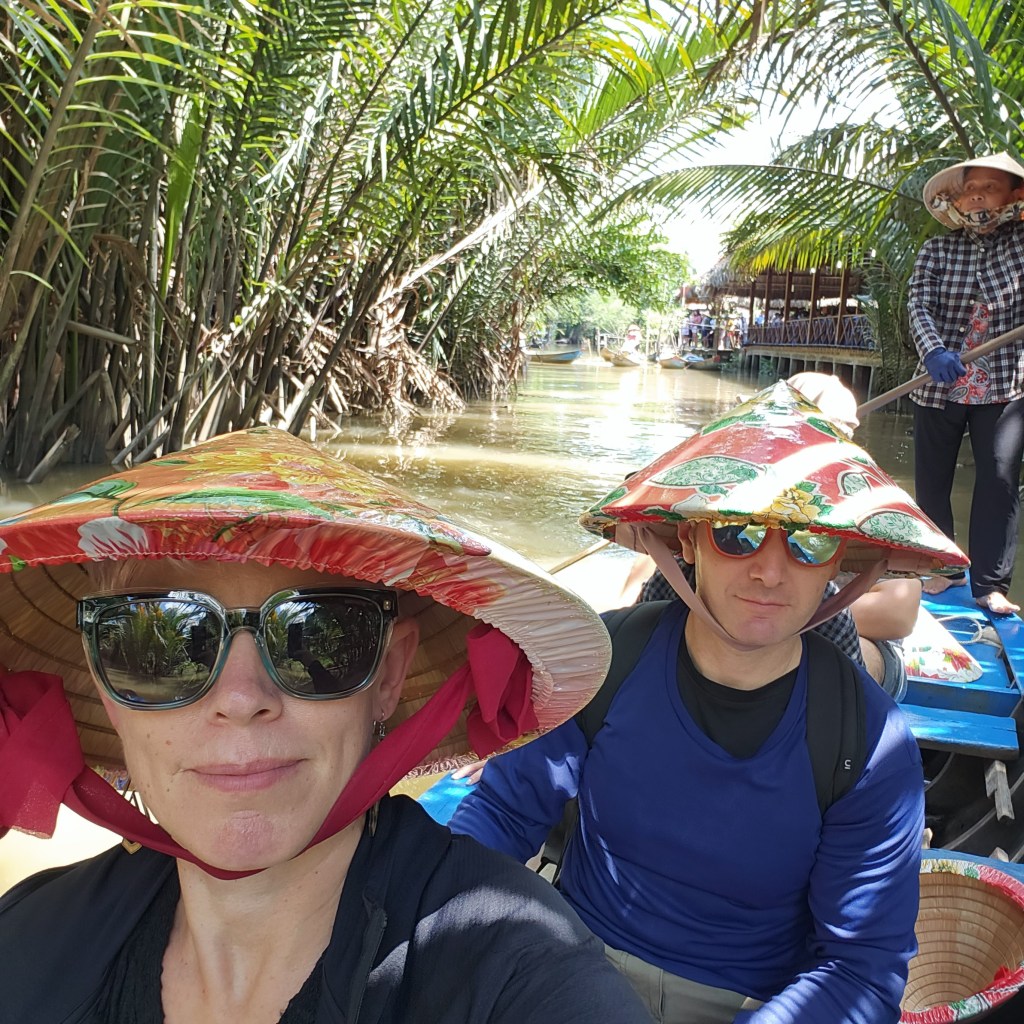
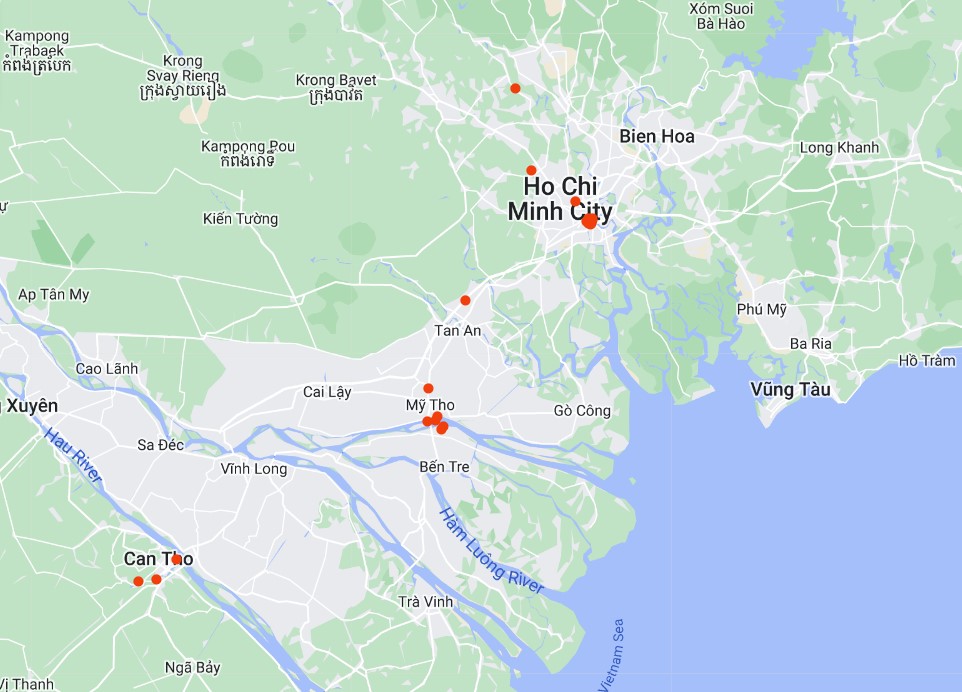
Josh and I began our Summer Break tour in Ho Chi Minh City, aka Saigon. Hanoi is the Political capital of Vietnam, and Saigon is the financial and entertainment capital. Saigon is generally less conservative than Hanoi, and the air quality is usually better due to proximity to the coast and distance from China.
I booked a tour package including the Mekong Delta, Cu Chi tunnels, and Ho Chi Minh City tour. These were broken up into two different tours with two different companies.
Mekong Delta
Usually when we take a tour, we are grouped with a bunch of other Westerners, and are a bit of a spectacle to locals when we get out of the van, and then we join hoards of other foreigner groups at the same tourist attractions.
The Mekong Delta tour was different, we were loaded into a van with all Vietnamese people. The tour guide spent two days saying everything in Vietnamese and then English just for us.

We went places Vietnamese tourists would want to go, with no Western meal options in the restaurants like we usually get. The most notable was just soup or rice options for breakfast and the huge family style meals for lunch and dinner with an authentic tabletop portable stove cooking a whole fish that you pick at with your chopsticks and then when there’s nothing left but bones, you take the picked over carcass off the stove and put the fish soup on which is big chunks of fish in broth. When the soup broth is bubbling, add the fresh vegetables that are conveniently on a ring-shaped pot around the soup pot, then serve in a few minutes. For lunch one day, there were curried frog legs.
Josh tried it all, but I stuck to a vegetarian (An chay) diet, which fortunately, the tour was very accommodating with this request. Side note: it is customary for some Vietnamese to eat with their mouths open and make smacking sounds to show appreciation. I was aware of this before, but this was the first time we shared so many meals with a large group and it was very evident.
We went to a couple of large pagodas and a couple of obstacle course amusement parks. These amusement parks are definitely for the locals. For the two day tour, we almost never saw other foreigners, it was a great opportunity for us.
On the Mekong tour, we of course embarked on many many different boats. From small row boats, to medium putt-putt river boats, and on to a large three story dinner cruise vessel.
We visited Unicorn Island where bees float from one gorgeous fragrant flower to the next, and the women have a buzzing honey business complete with cosmetic containers of royal jelly you may eat or slather on your skin. The flier had a bulleted list of ailments that could be alleviated with the stuff, it is basically a cure all and beauty-enhancer.
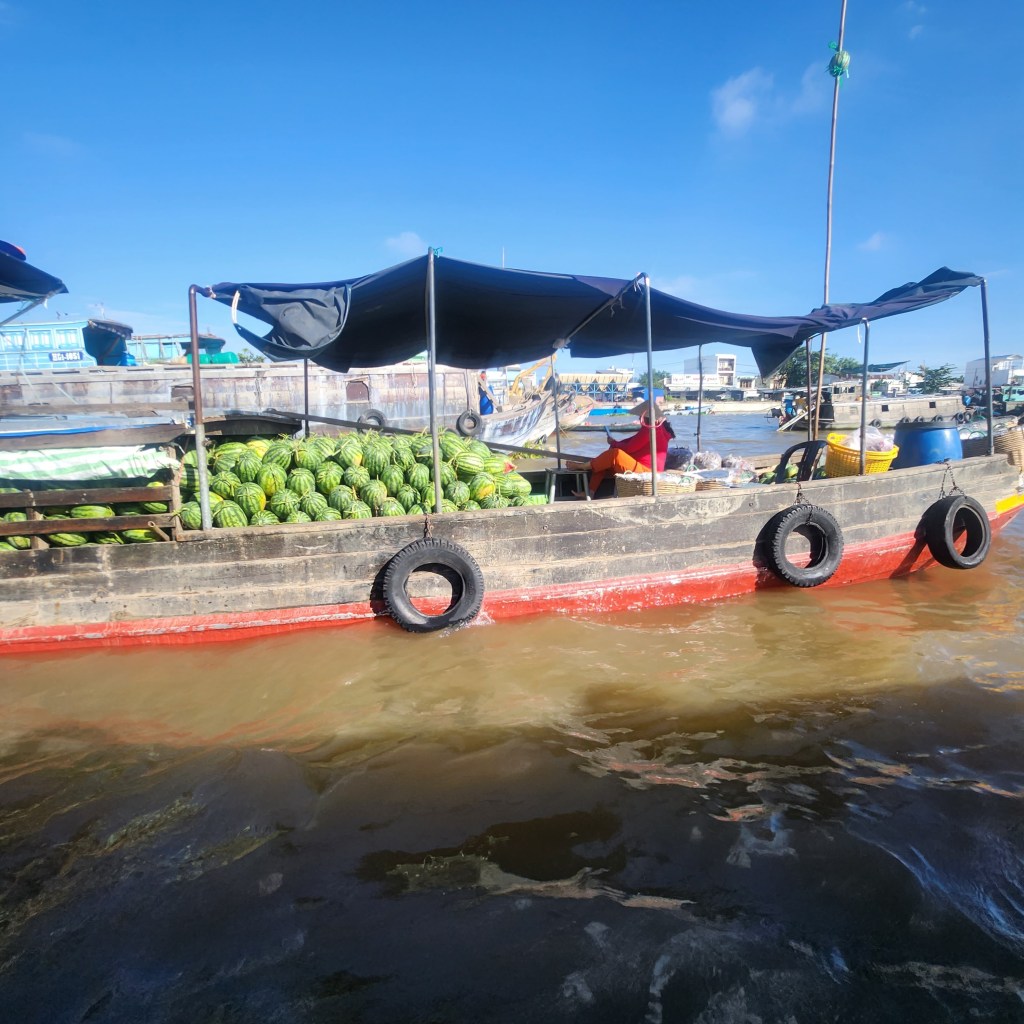
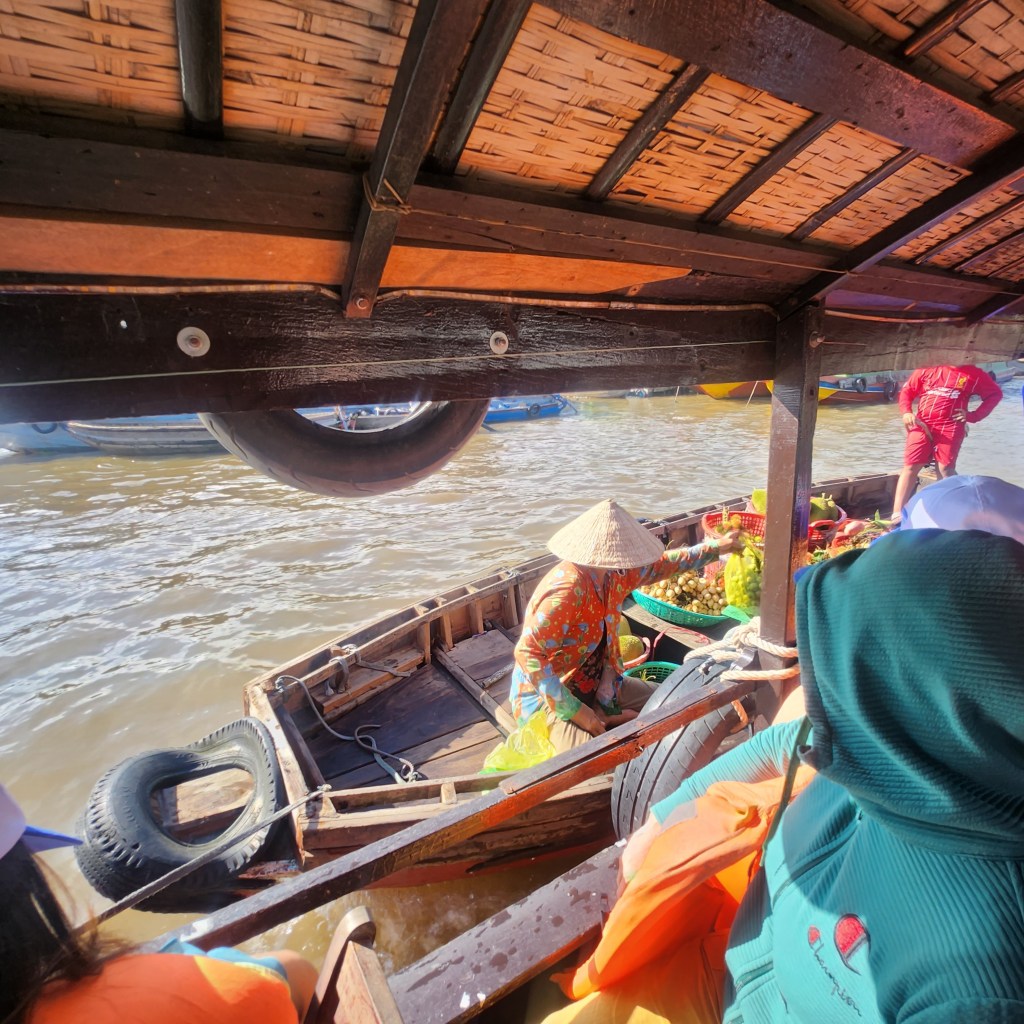
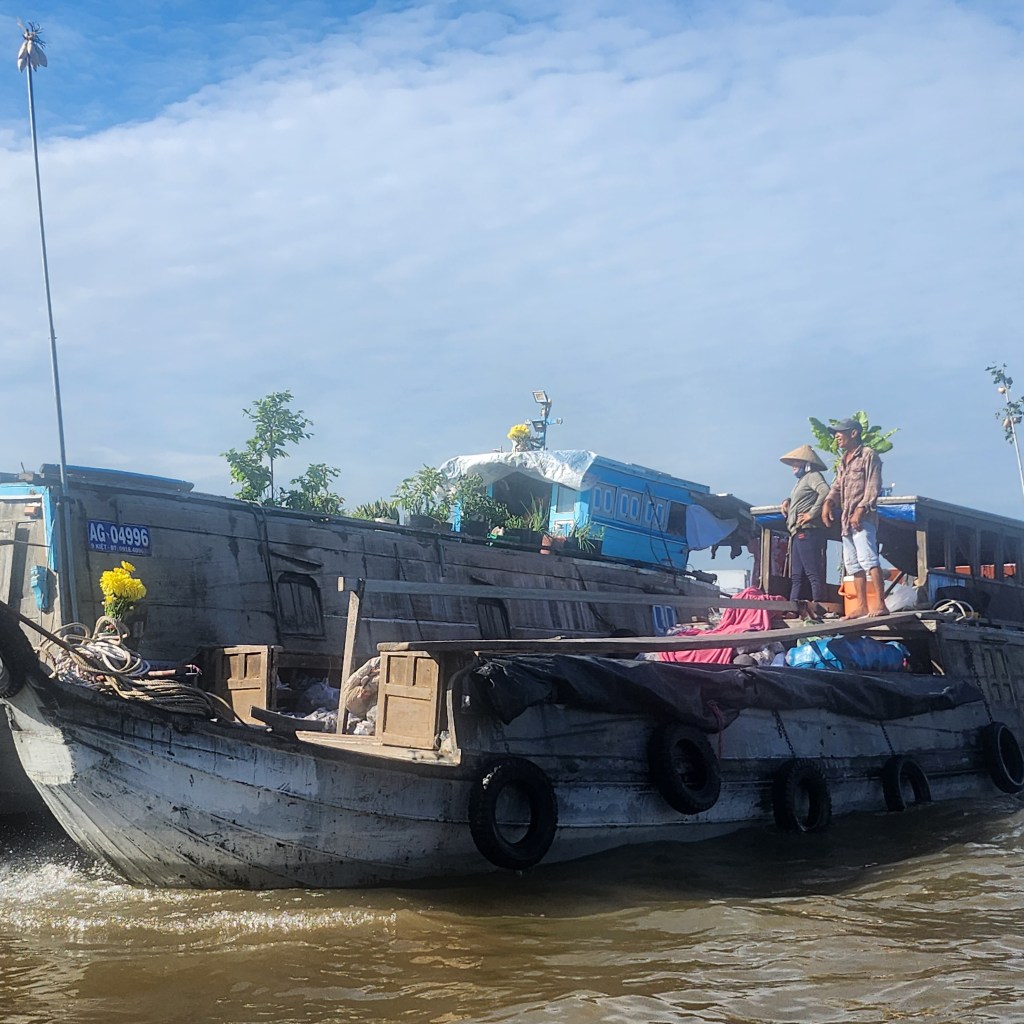
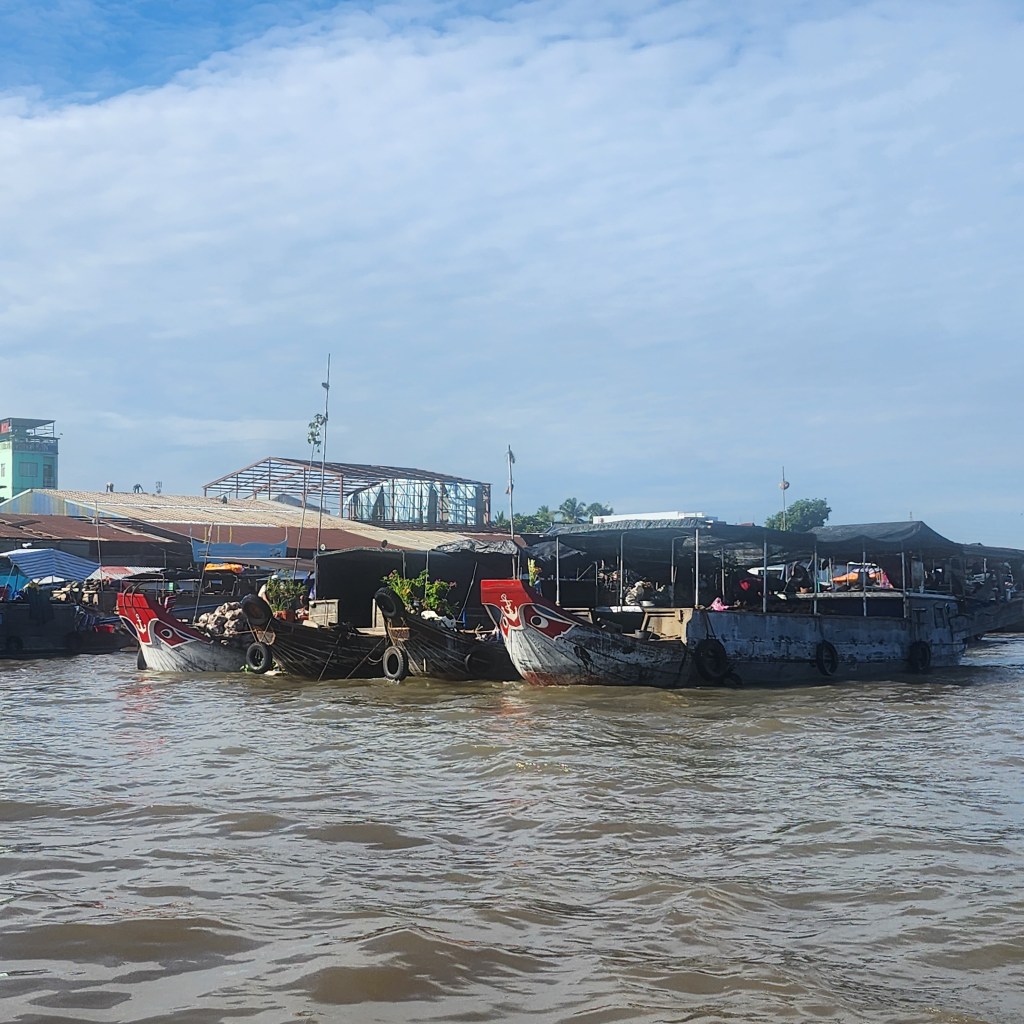
On a different putt-putt river boat, we meandered around the floating market, which is like if Costco was established over 50 boats in the middle of a river. Everything is for sale in large volume only. Regular people come to buy in bulk and then sell the product individually in front of their house. But of course, there’s also small merchants giving out samples of fruit and selling snacks and refreshments to both the buyers and the sellers. It’s like if Costco’s hotdog stand moved around and tied themselves to your cart
The dinner cruise was host to what seemed like 300-500 people in long rows of tables. Live singers with a keyboard and electric guitar accompaniment belted out popular Vietnamese pop and ballads, a woman in a punk rock circus wrangler costume did kinda bad magic tricks. Customers cooked their own food at their tables and shared smuggled in “rice wine” which is basically moonshine, and in this case, moonshine in clear plastic 500ml Aquafina water bottles. Once adequately loosened up, the guests started putting in hand-written paper requests to the live band and taking over the mic on stage to sing Karaoke.
The morning after the dinner cruise, the group we called The Grannies, three middle aged women with a teenage boy, were late to the tour bus. After much calling and knocking on their hotel room door, they got on the bus wearing the same nice dresses they wore at dinner. Did they stay out all night singing karaoke?
We set off about thirty minutes late. However, if the grannies hadn’t been late, then we wouldn’t have witnessed a small segment of the American TV show, The Amazing Race, being filmed at the largest pagoda in South Vietnam, Trúc Lâm Phương Nam Zen Monastery. We arrived just as some contestants were hopping out of a cab and running to the courtyard to meet the host of the show and a beautiful woman in an Ao Dai (traditional Vietnamese dress with trousers) who clapped her tiny hands every time a pair of contestants would run up.
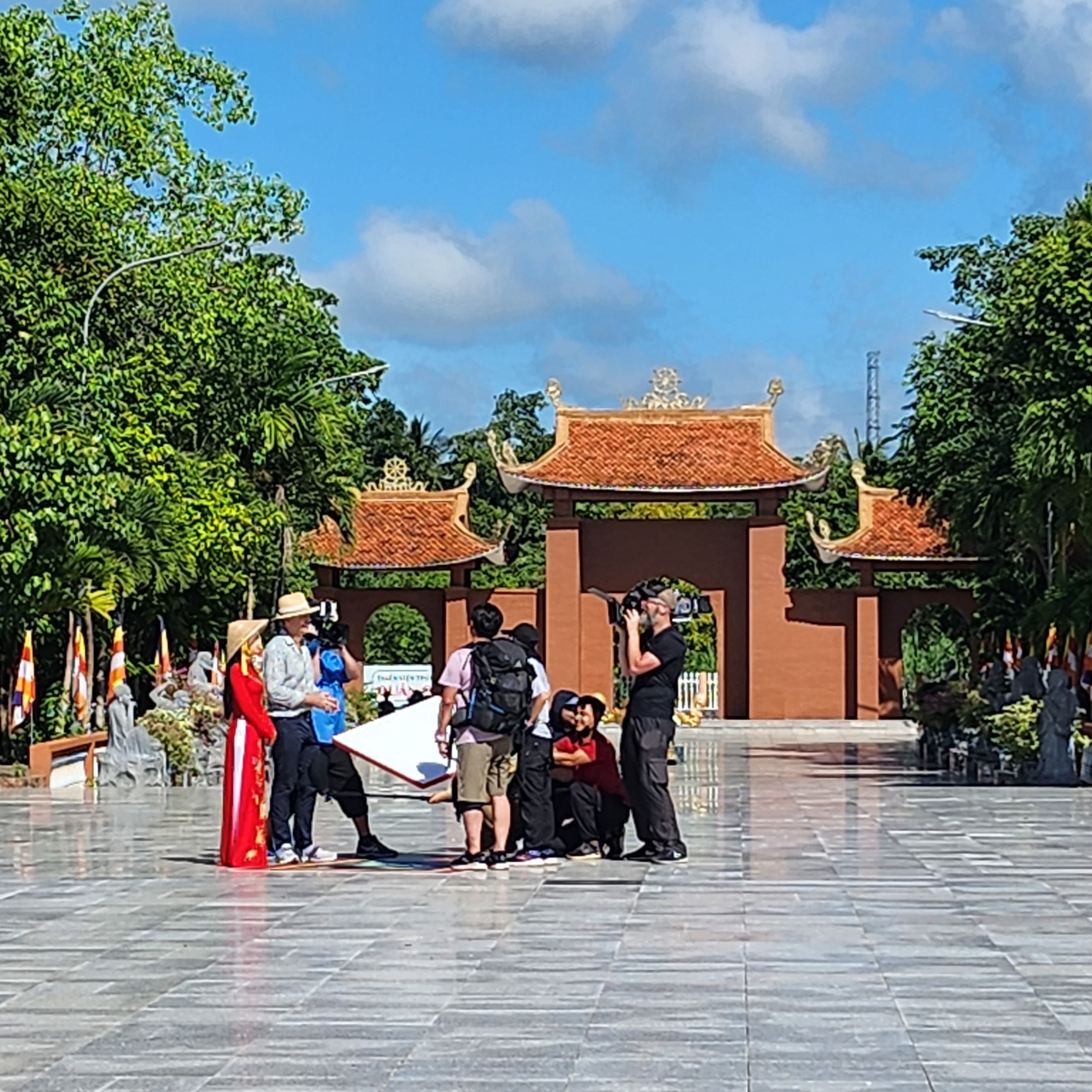
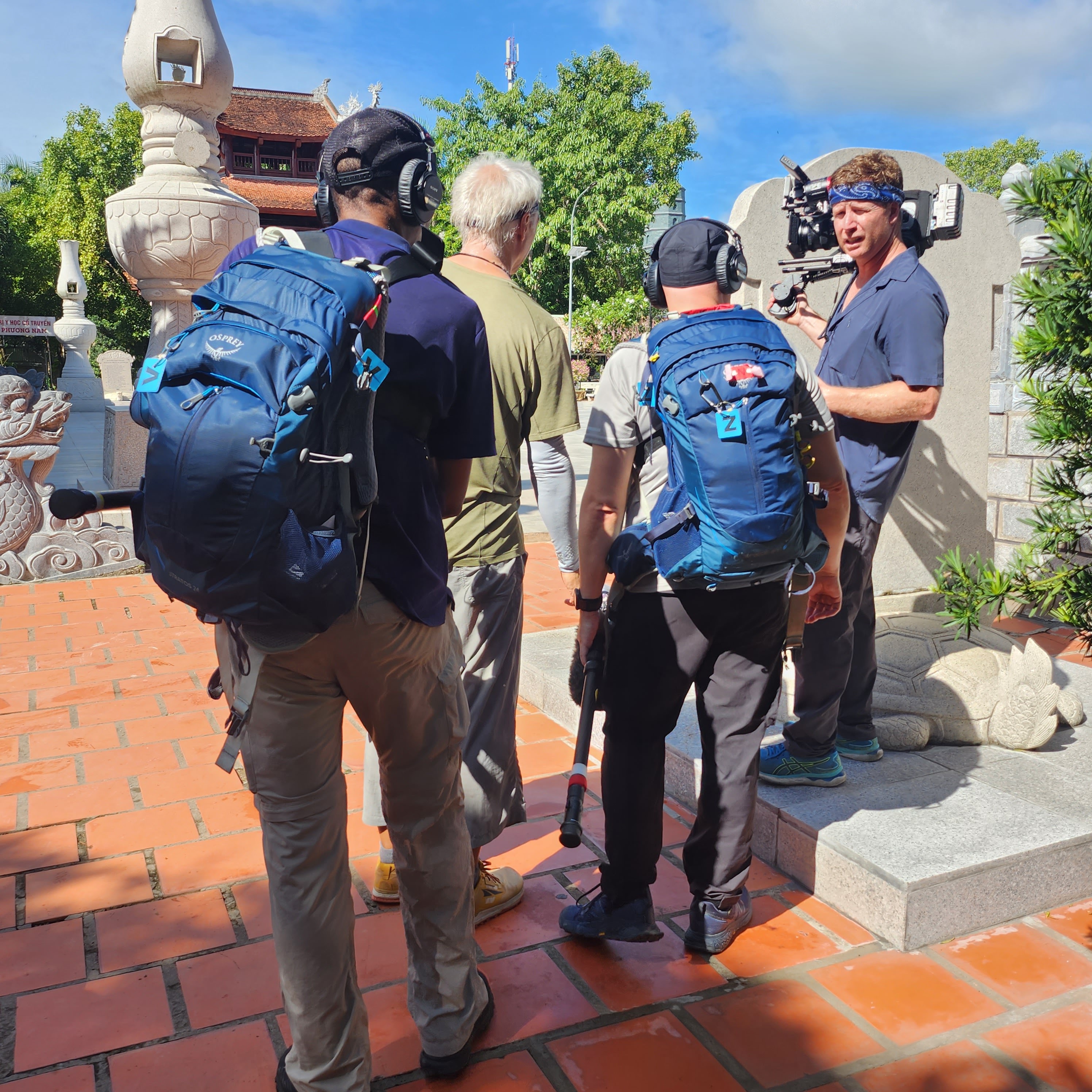
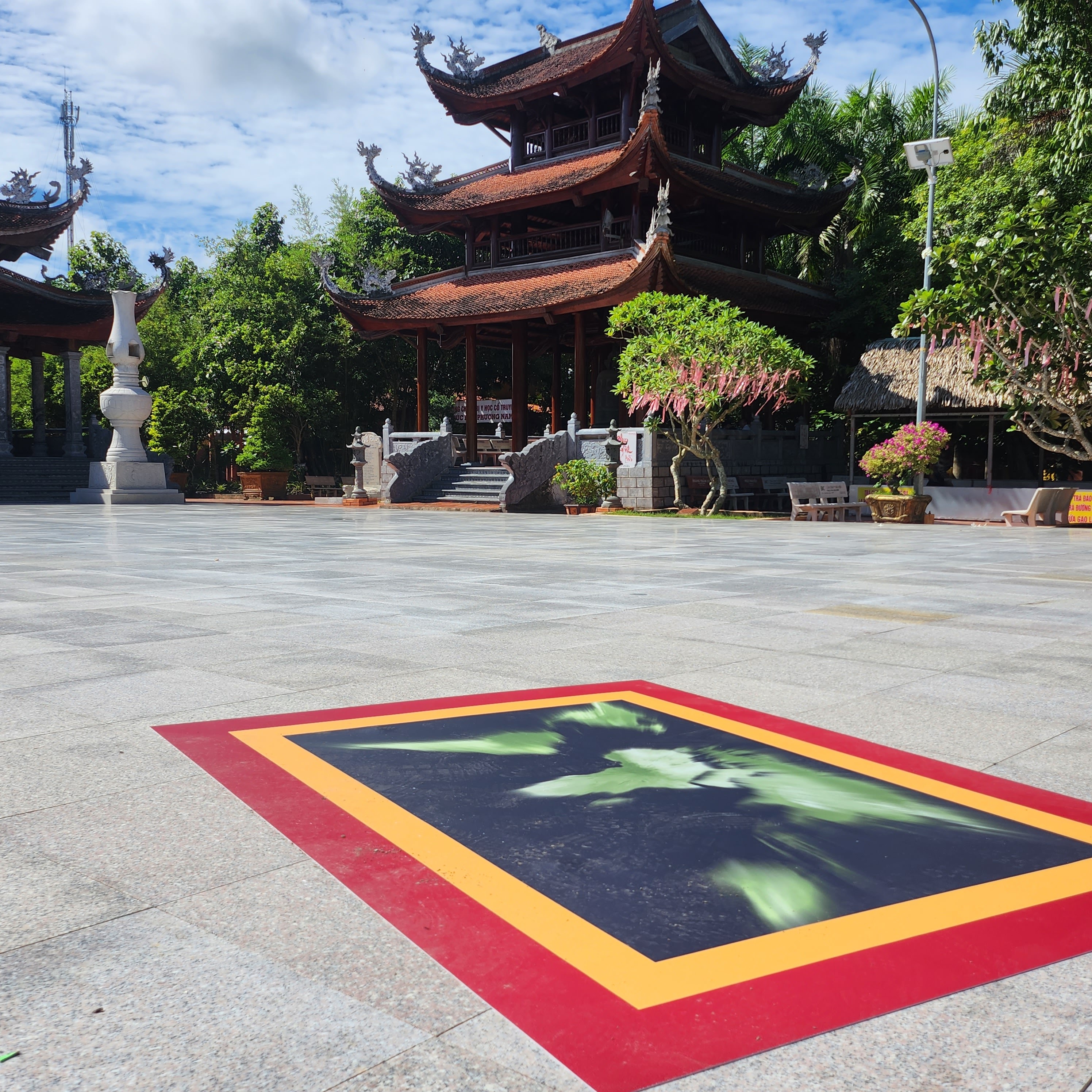

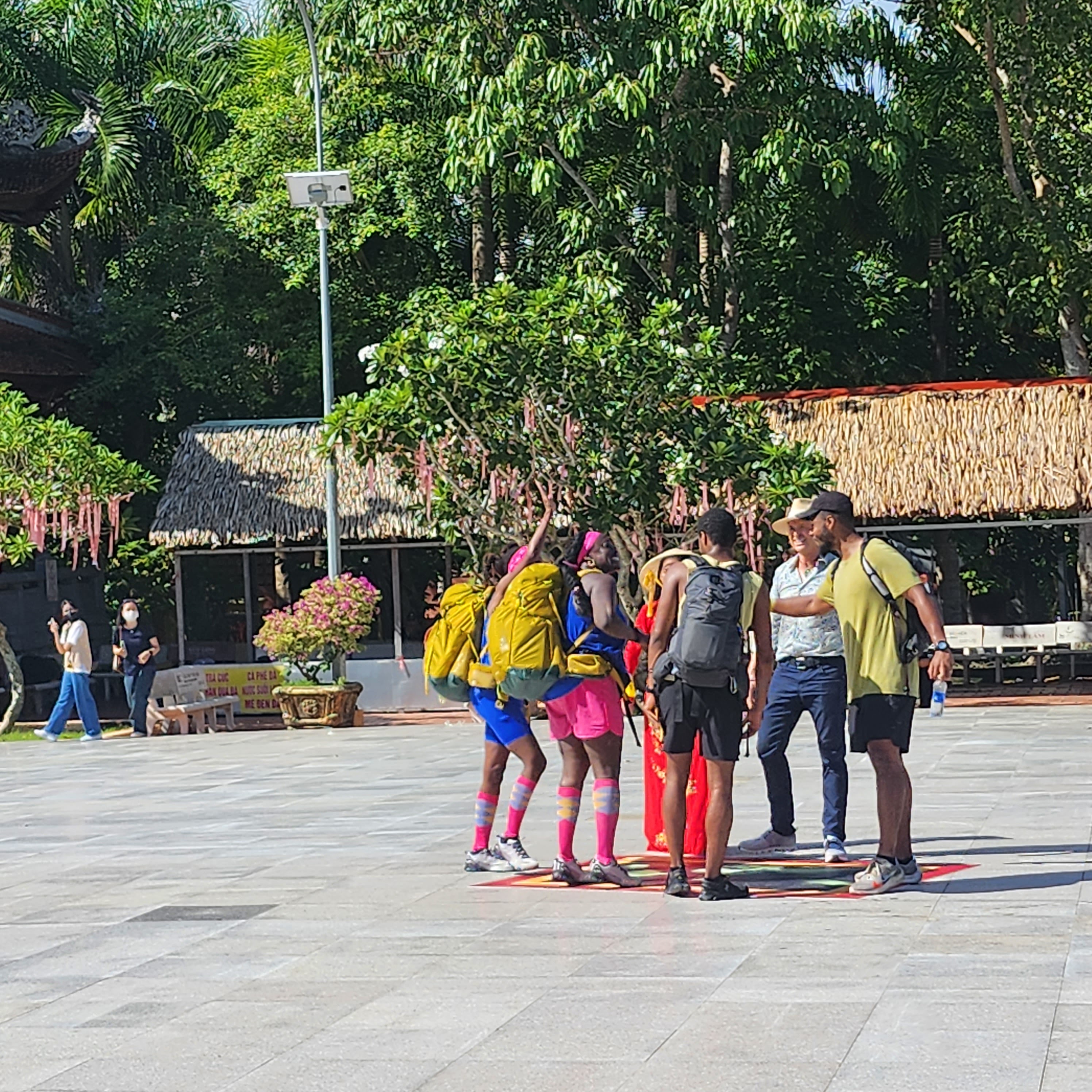
Josh and I were very interested in watching how it all worked. the direction given to the contestants as they sauntered up to the courtyard, “Okay now run up to so-and-so.” They would start running and then the camera crew would full-on sprint behind them to give motion and urgency to the footage.
There was hardly anyone around. The only people interested in the commotion were me and Josh (of course because we are Americans) and a couple of monks looking on.
Ho Chi Minh City
New day, new tour. We had a very energetic 25 year old tour guide who was just a delight. To me, he represents the new Vietnam. Young people are shucking tradition, questioning customs, and dreaming of much financial success.
His parents forced him to learn English when he was a kid and he hated it. He learned by watching YouTube and video recording himself speaking lines and engaging in self-critique.
He says he is so glad he knows English now because he loves being a tour guide and he wants to own a fleet of tour vans someday to rent out to various companies.
War Museum
We went to The War Remnants Museum, formerly known as The Museum of War Crimes of the Puppet and U.S.. The name changed in the early ’90s, according to our tour guide, it was changed as part of the strategy to normalize relations with the US as a protection measure against China.
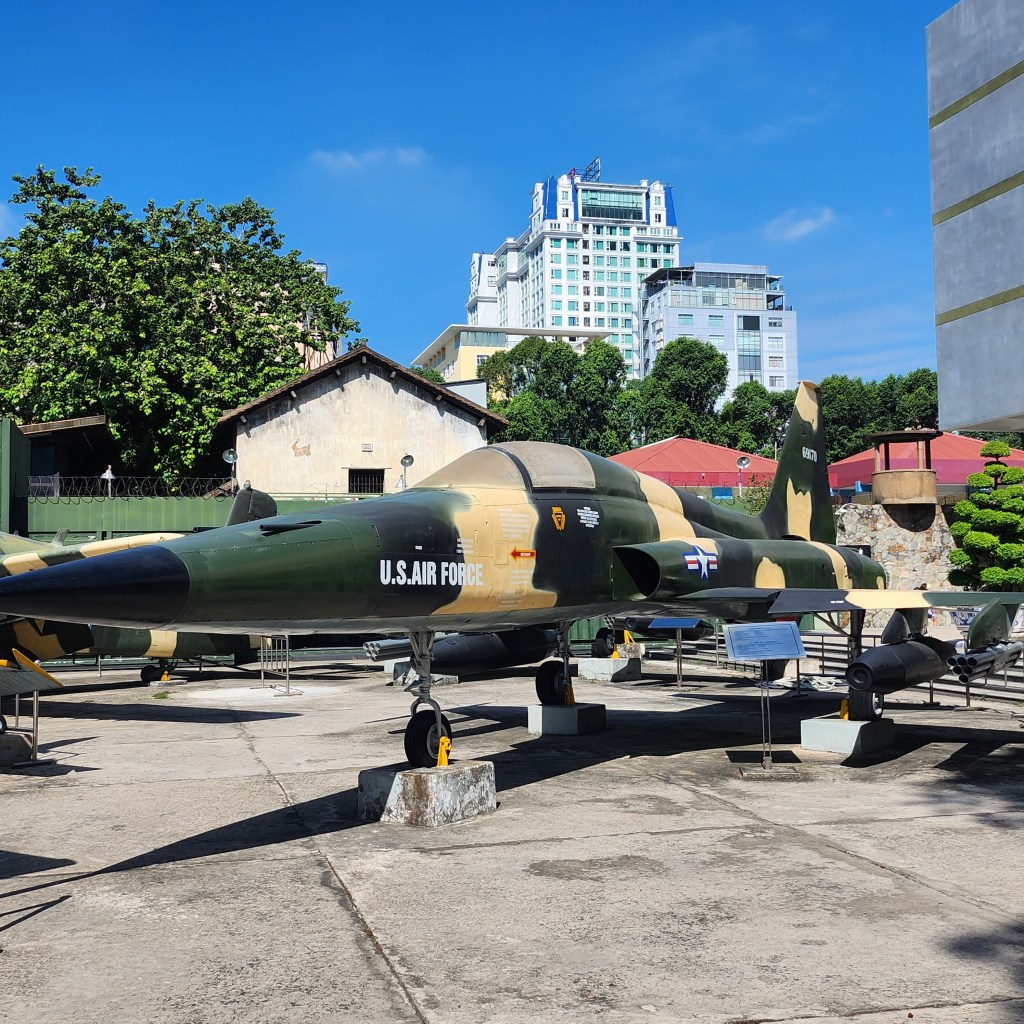
The grounds of the museum were covered in U.S. tanks and aircraft we left behind. The Indian woman in our group asked why we didn’t take all this stuff with us and I speculated that we kind of left in a hurry. Plus, it gives us an excuse to make more.

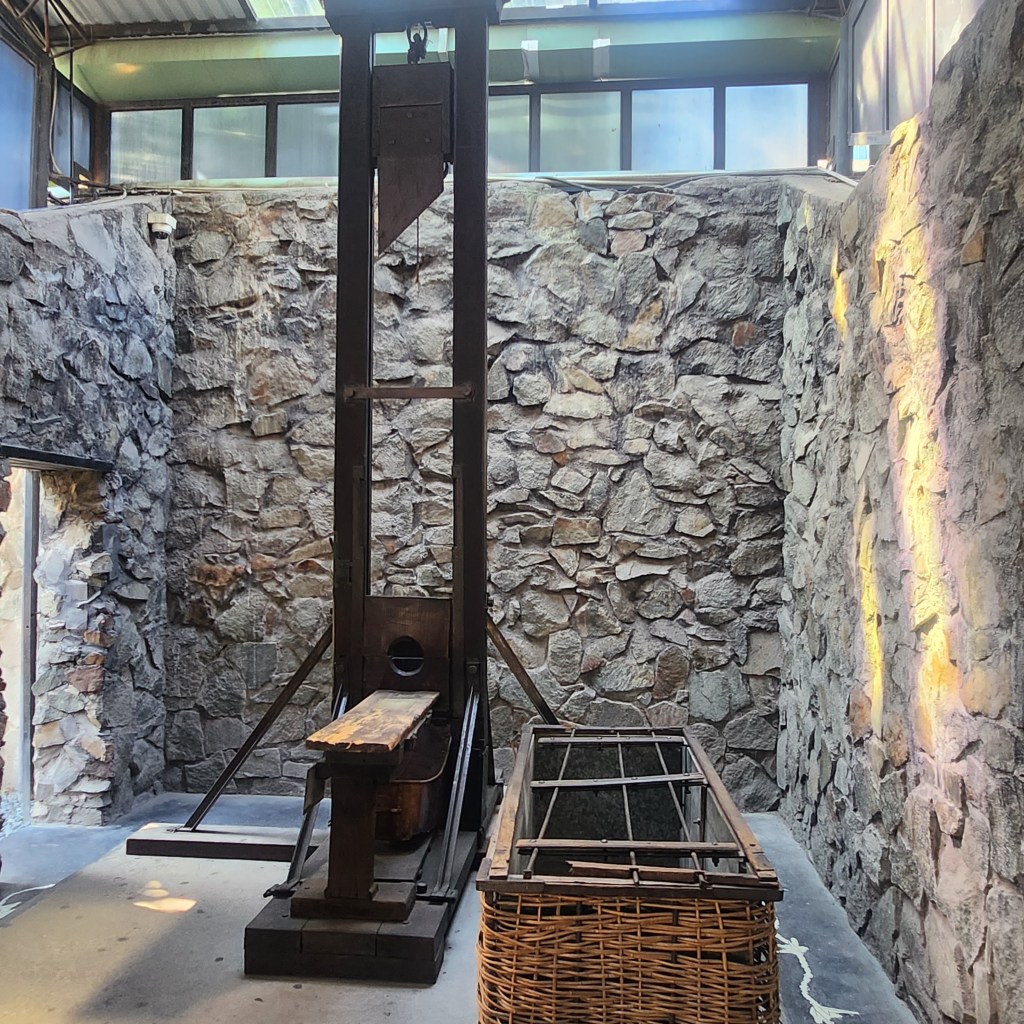
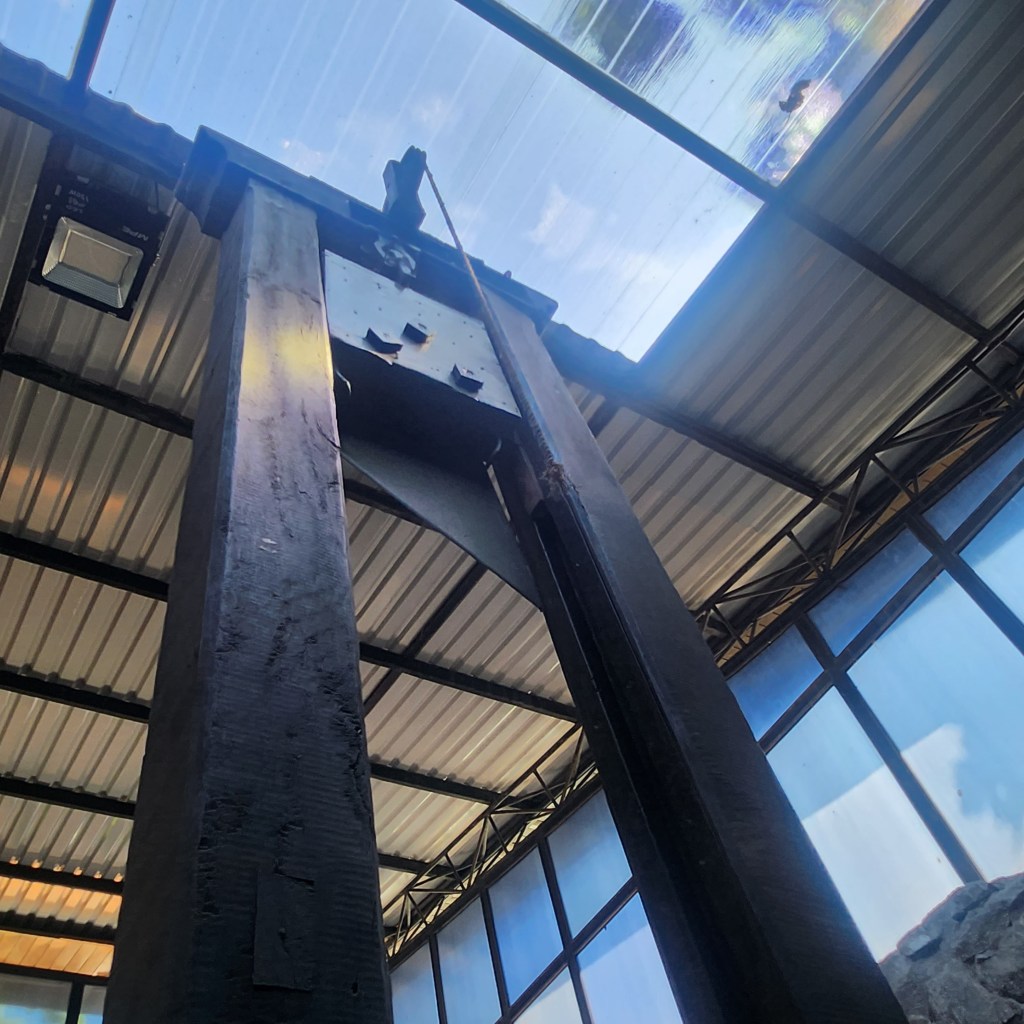
Also on the grounds were replica “Tiger Cages” to show how the French imprisoned guerilla fighters. An old guillotine displayed how prisoners were executed and I could not stop looking at it. Imagining the heads dropping in the bucket.
The first floor of the museum was dedicated to the timeline of the Vietnam War, general hardships faced by the people, and photos of protests against the war from around the world.
The second floor had two doors, one read “War Crimes” and the other read “Agent Orange”. The War Crimes room showed horrific photos of atrocities committed by the U.S.. I had to look away a few times, and had to leave to get a tissue and clean my face, but I forced myself to look at all the photos. I know many are readily available in books in the U.S., but there is something about being here, interacting with people daily, walking by mothers and babies in the neighborhood and seeing them in these horrible pictures from the past.
The thing with Agent Orange is that it is still affecting babies being born today. We are in the third or fourth generation of Vietnamese babies being born with debilitating deformities.
In the U.S., vets successfully sued Monsanto for poisoning them. However, when the Vietnamese tried to hold them accountable, the case failed. So it is their fault the U.S. service members are having health problems, but it is not their fault the Vietnamese are having health problems.
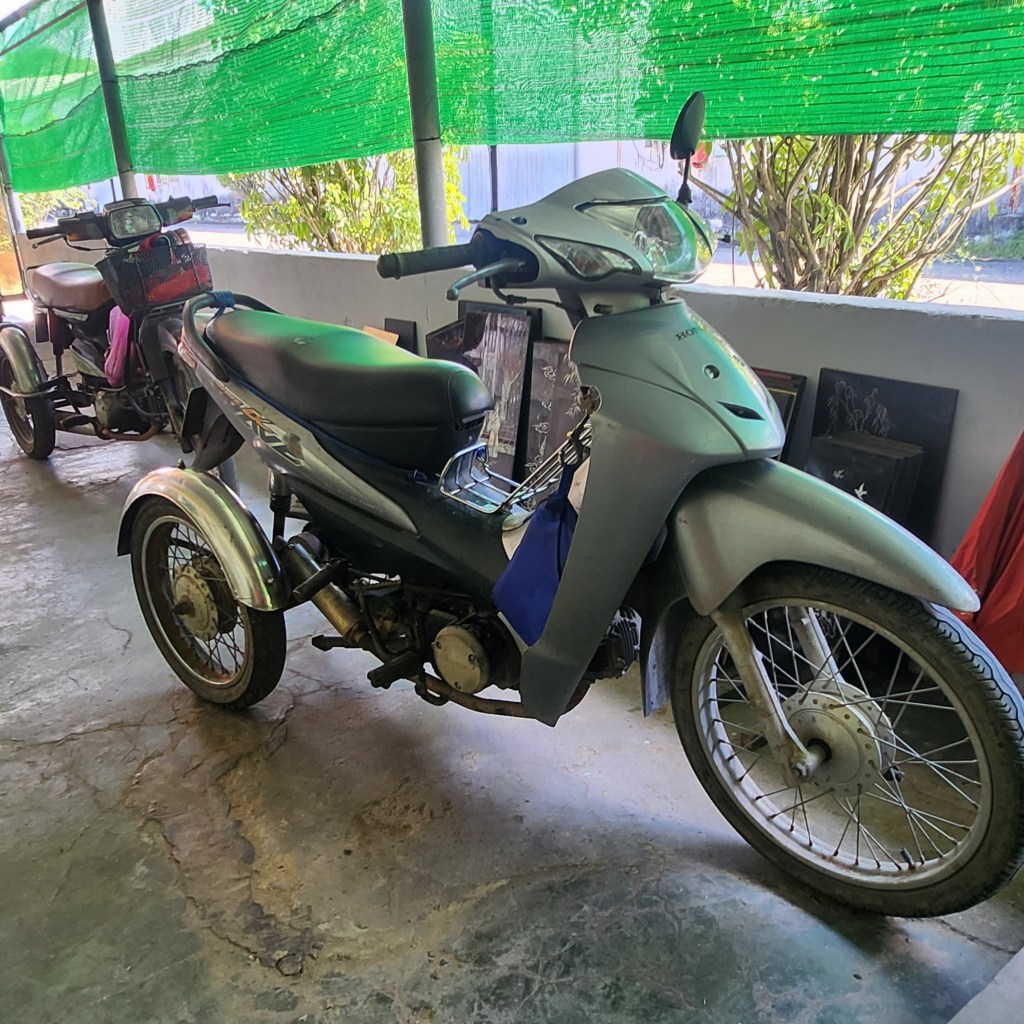
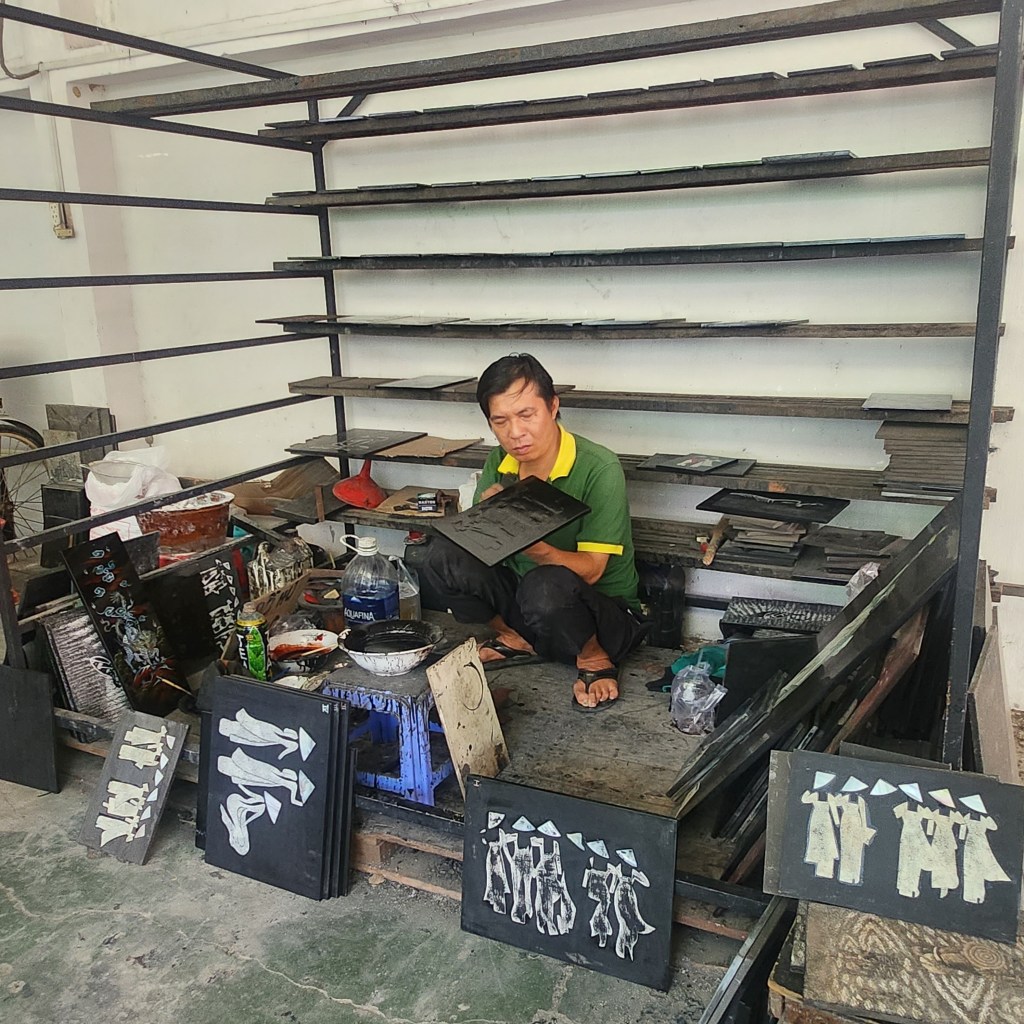
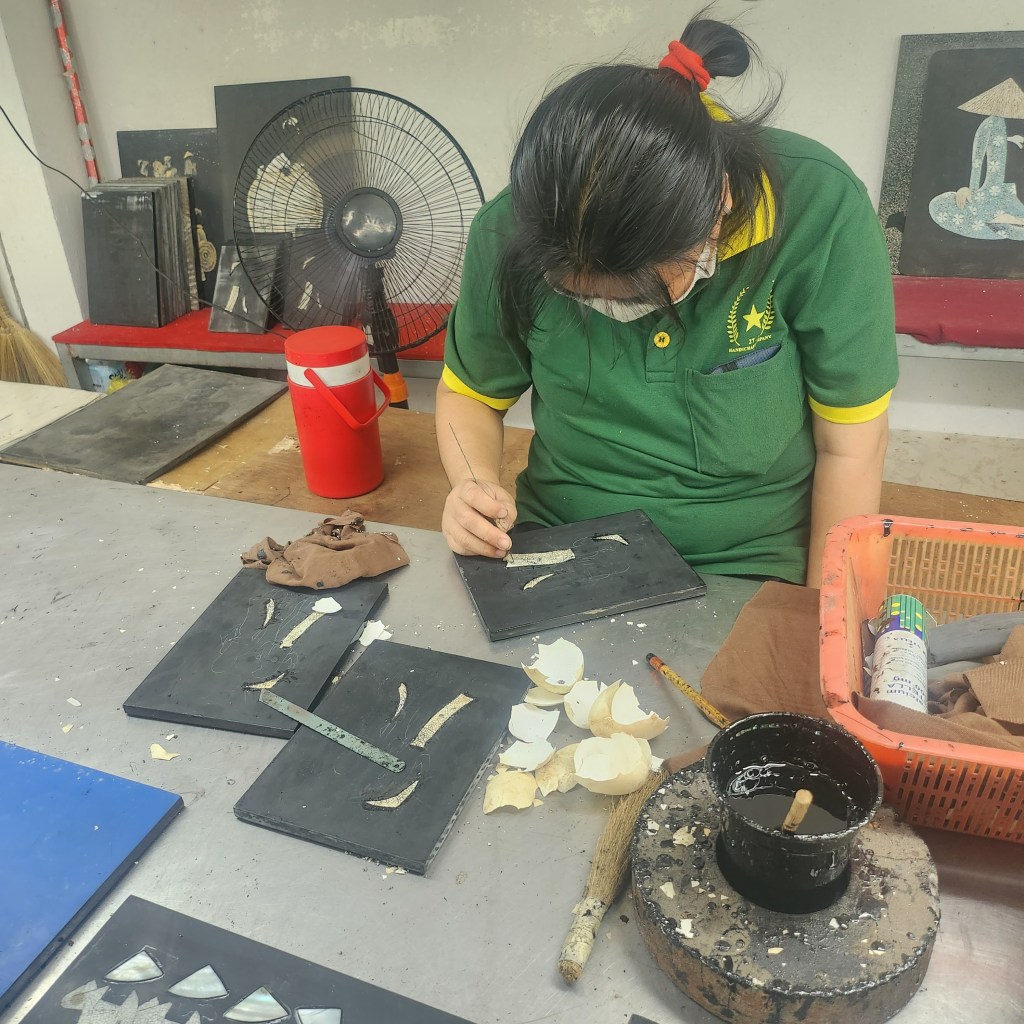
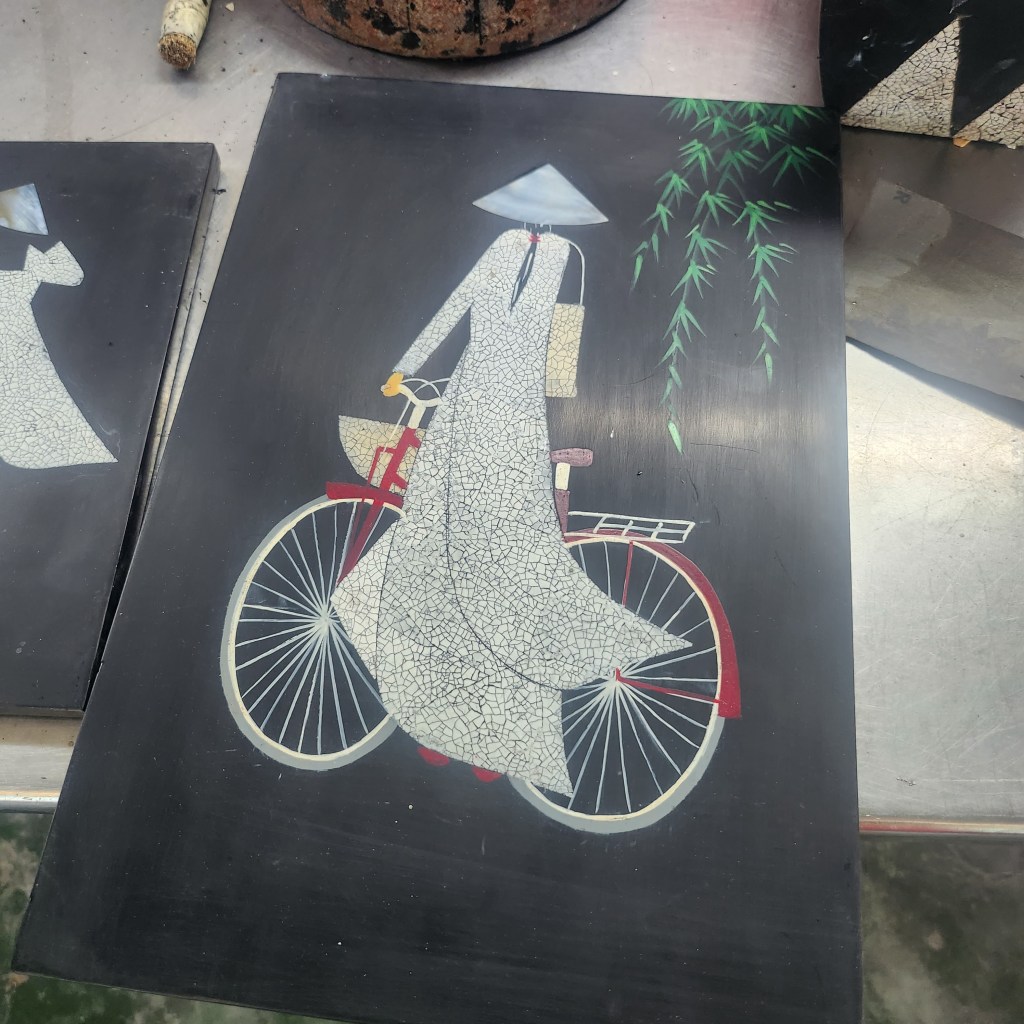
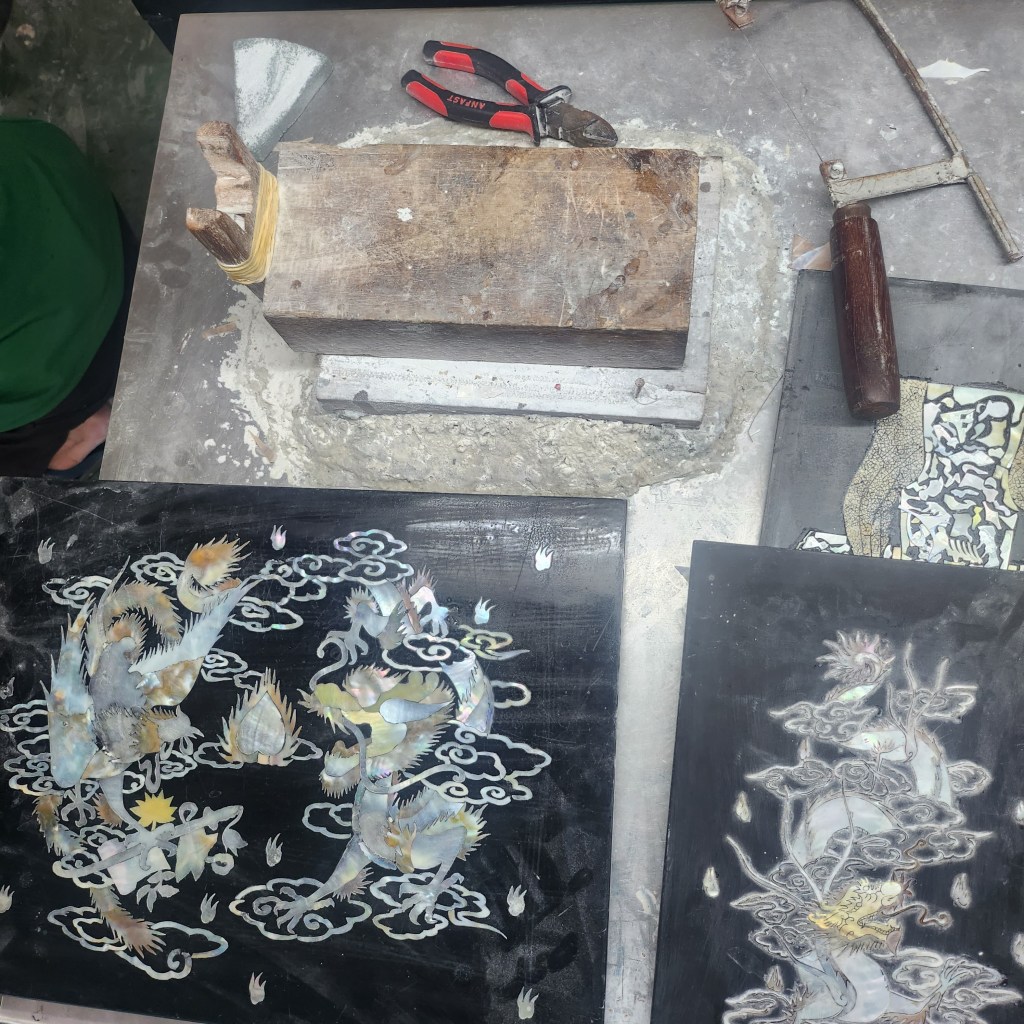
On our way out to the Cu Chi tunnels, we stopped at an artist coop staffed entirely by people affected by Agent Orange. They make lacquer artwork pieces with paintings, duck eggshell mosaics, and mother-of-pearl mosaics.
Cu Chi Tunnels
We drove about two hours away from the city to see the Cu Chi tunnels. This area is known for providing a base of operations for the Viet Cong and guerilla fighters against the U.S. during the war.
While the guide was talking to us about how the tunnels were made, I could hear live rounds of gunfire going off not too far away. According to the internet, no one in Vietnam has a gun except the military. I said, “I’m sorry, do I hear gunfire?”
The guide responded, “Yes. That is a feature of the tour, you can shoot AK-47s and other types of firearms. It costs about $3 per bullet with a minimum of 10 bullets. Do you want to try it?”
“No thank you. We are Americans. It is very easy for us to get our hands on any type of firearm. We were actually born with pistols in both hands.”
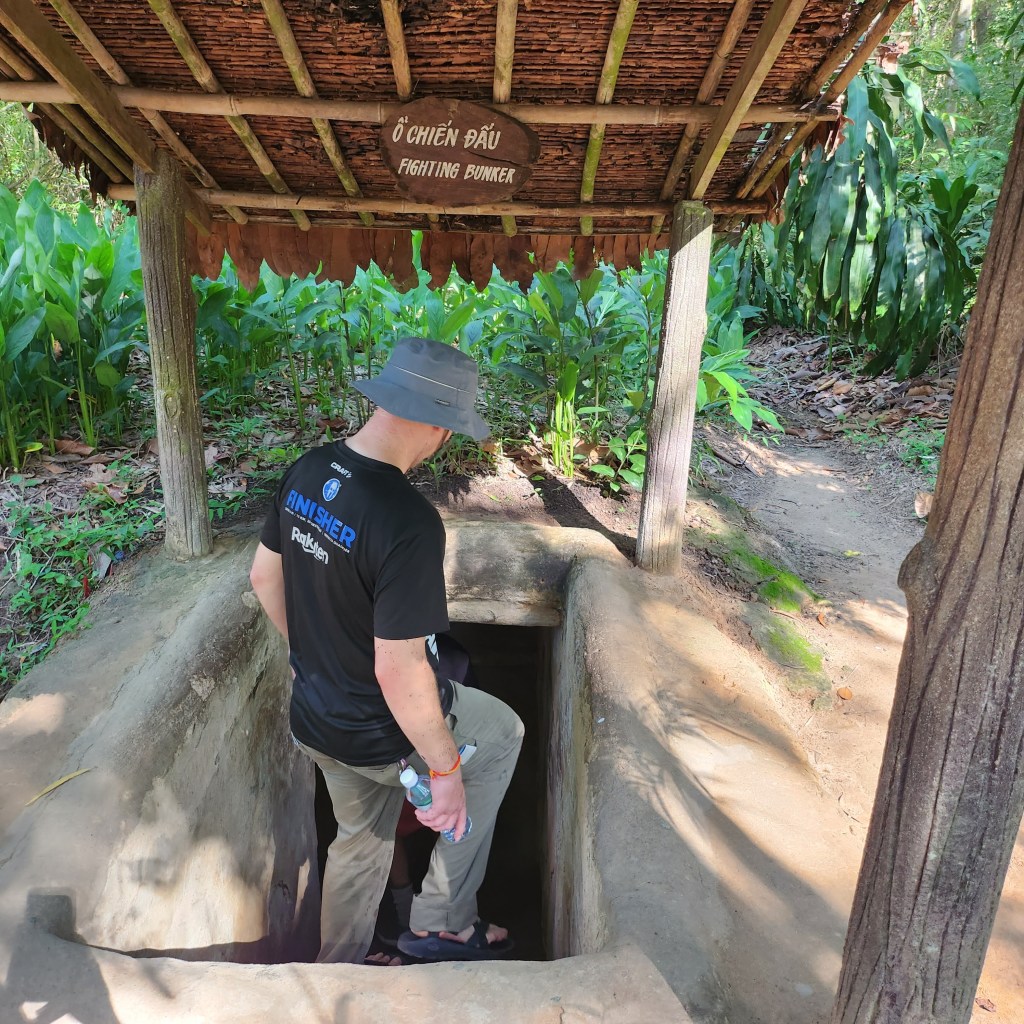
With live rounds going off in the distance, we got to slink down into a hidey-hole, which was just wide enough for our chest if we put our arms over our head to hold the lid/cover. The small tunnel was dark and damp. It was surprisingly thrilling to hide this way, we had big smiles on our faces. The grounds represent so much pain, suffering, hope, and triumph. It should be a somber affair, but we just couldn’t help it. The Indian guy on the tour with us had spent four months in a bunker in the war against Pakistan, and he was smiling too when he eased his 67-year-old tall frame down into the hole, so maybe it’s ok.
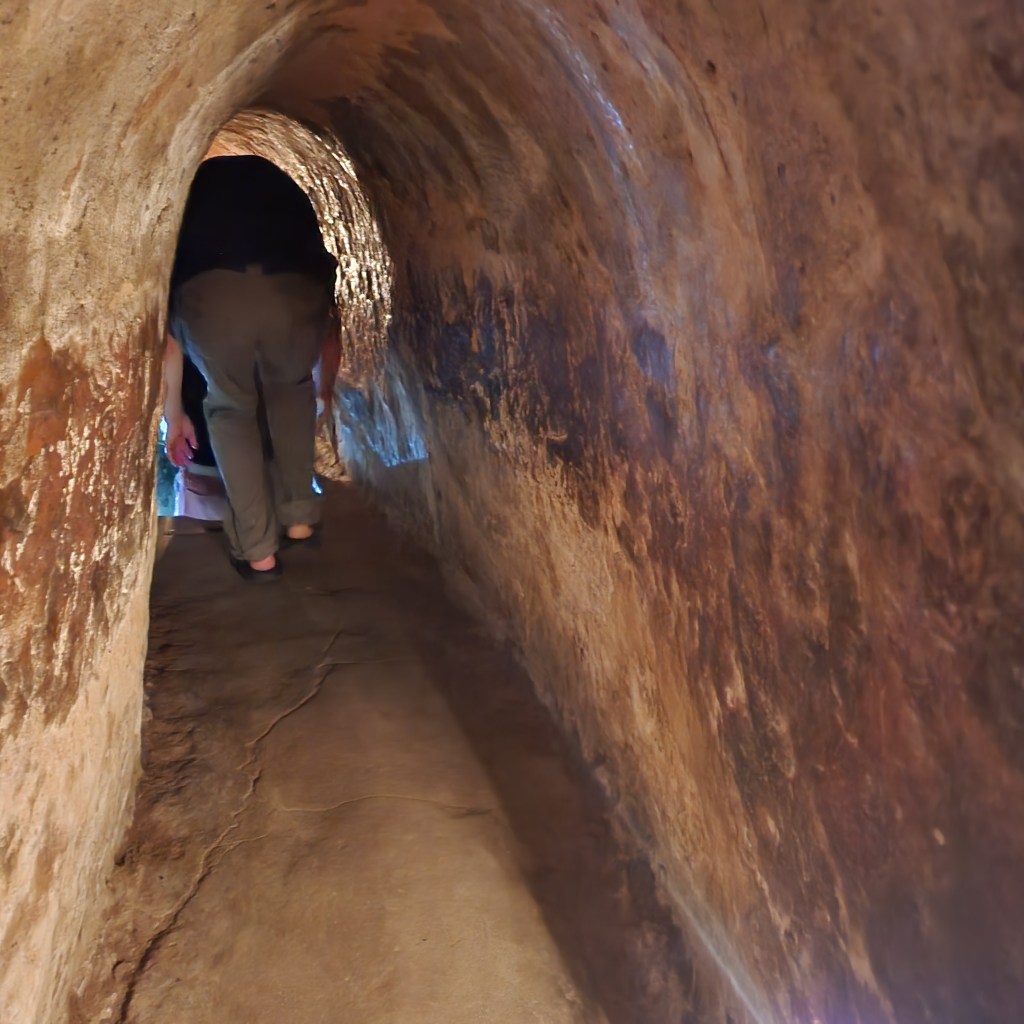
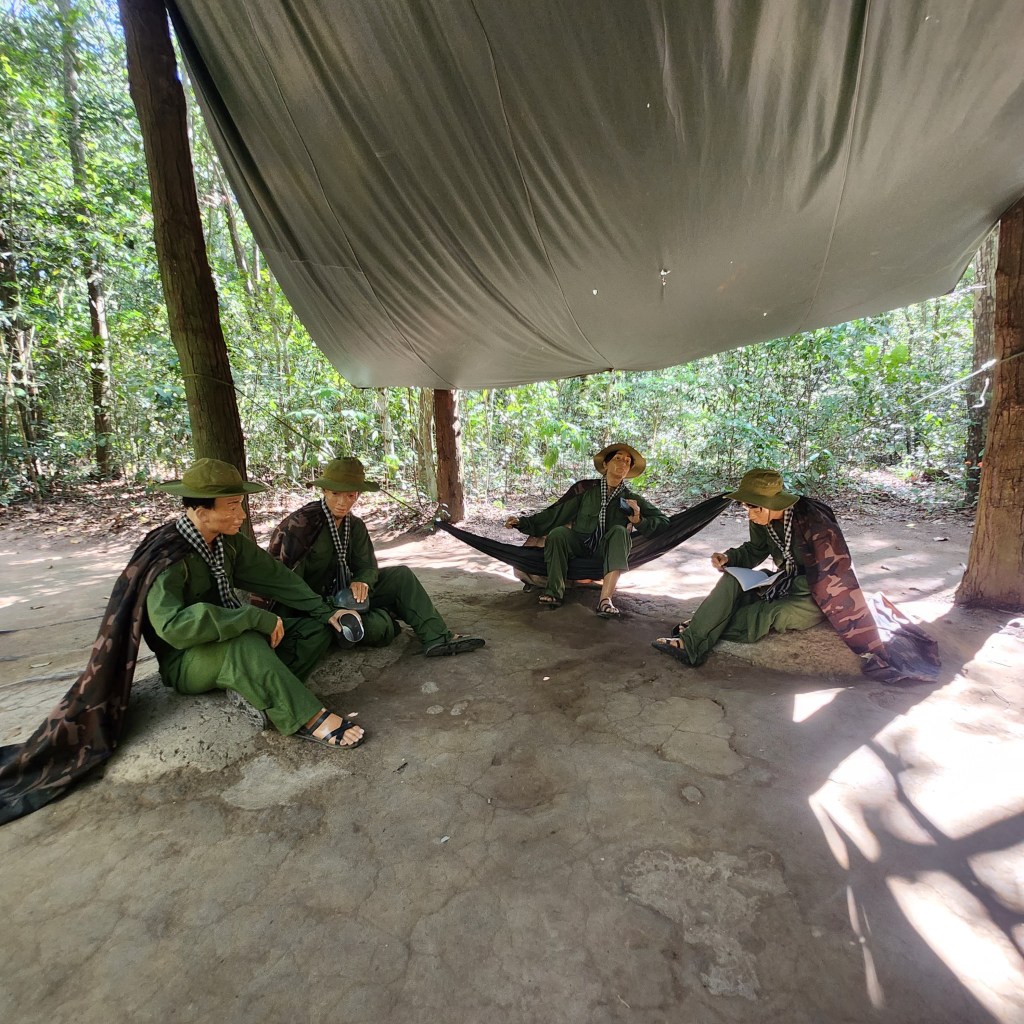
The guide demonstrated about a dozen different kinds of traps used by the Viet Cong to keep the enemy from finding a way to properly clear out the tunnels. Each soldier had an area of the tunnels he/she knew, but soldiers didn’t share information with each other, so you just knew your area and you didn’t wander anywhere else. There were local guides who were often women dressed in black with a black and white gingham scarf used for a variety of things like stopping bleeding or strangling someone. These women would guide soldiers who had marched down from the north through the woods so they wouldn’t step in a trap.
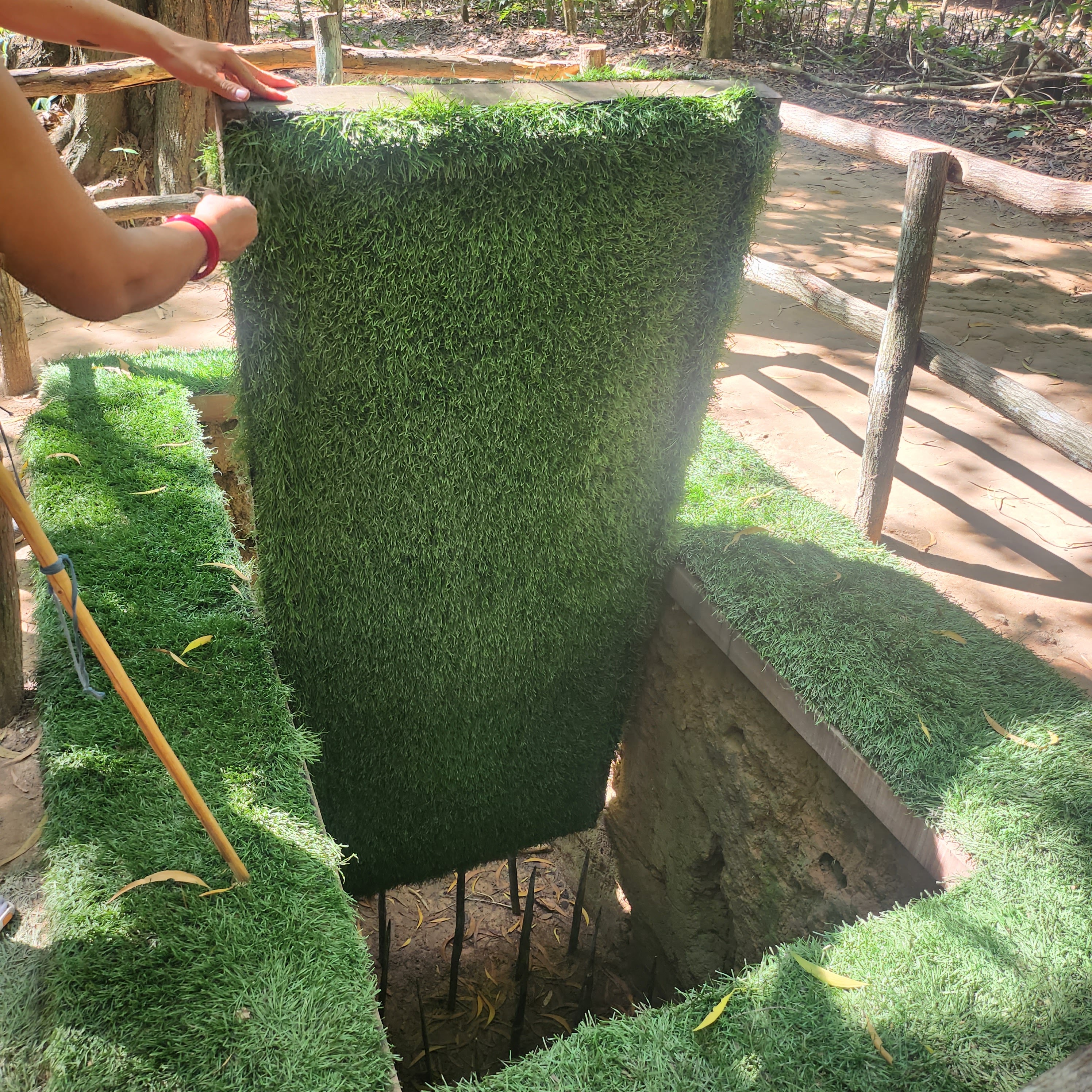
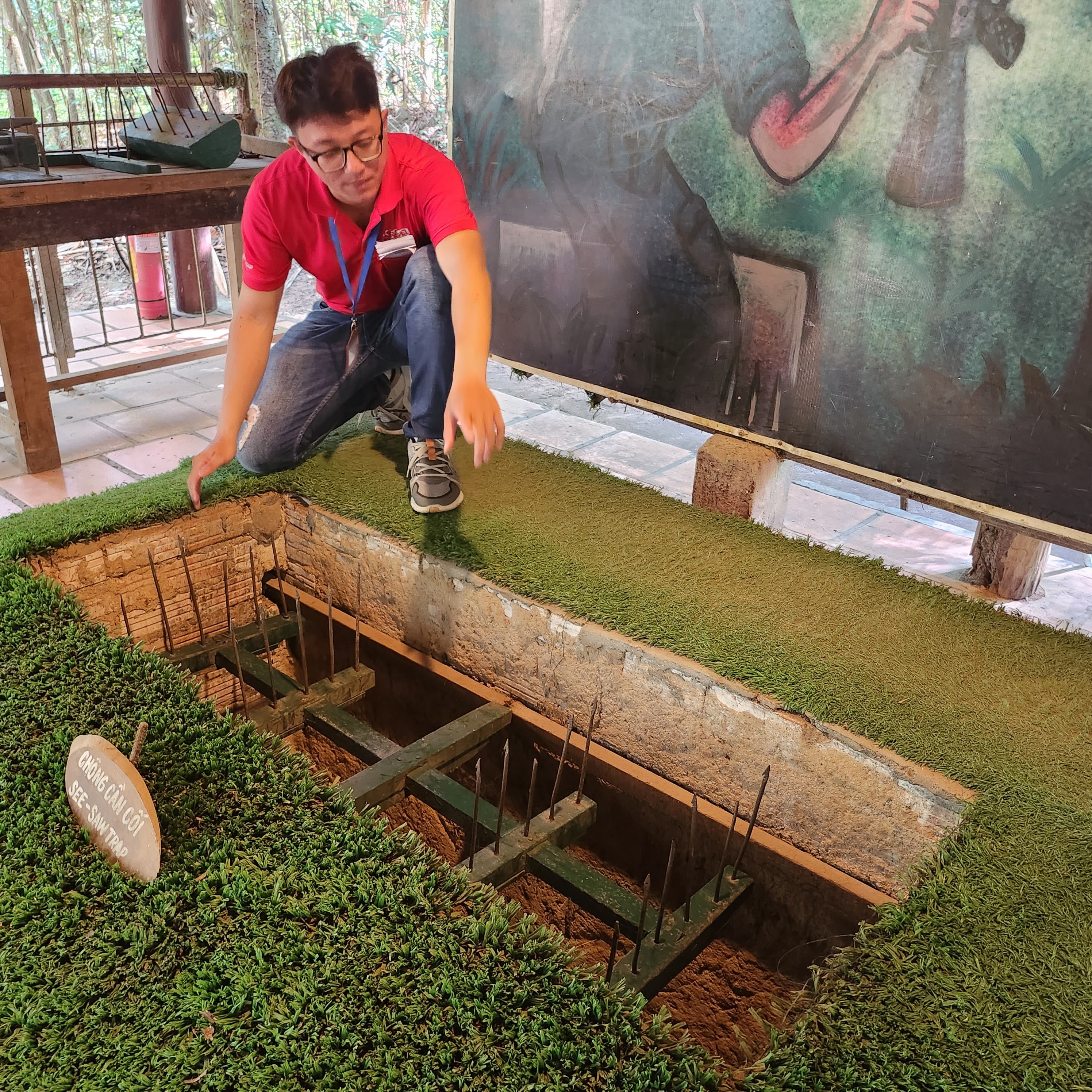
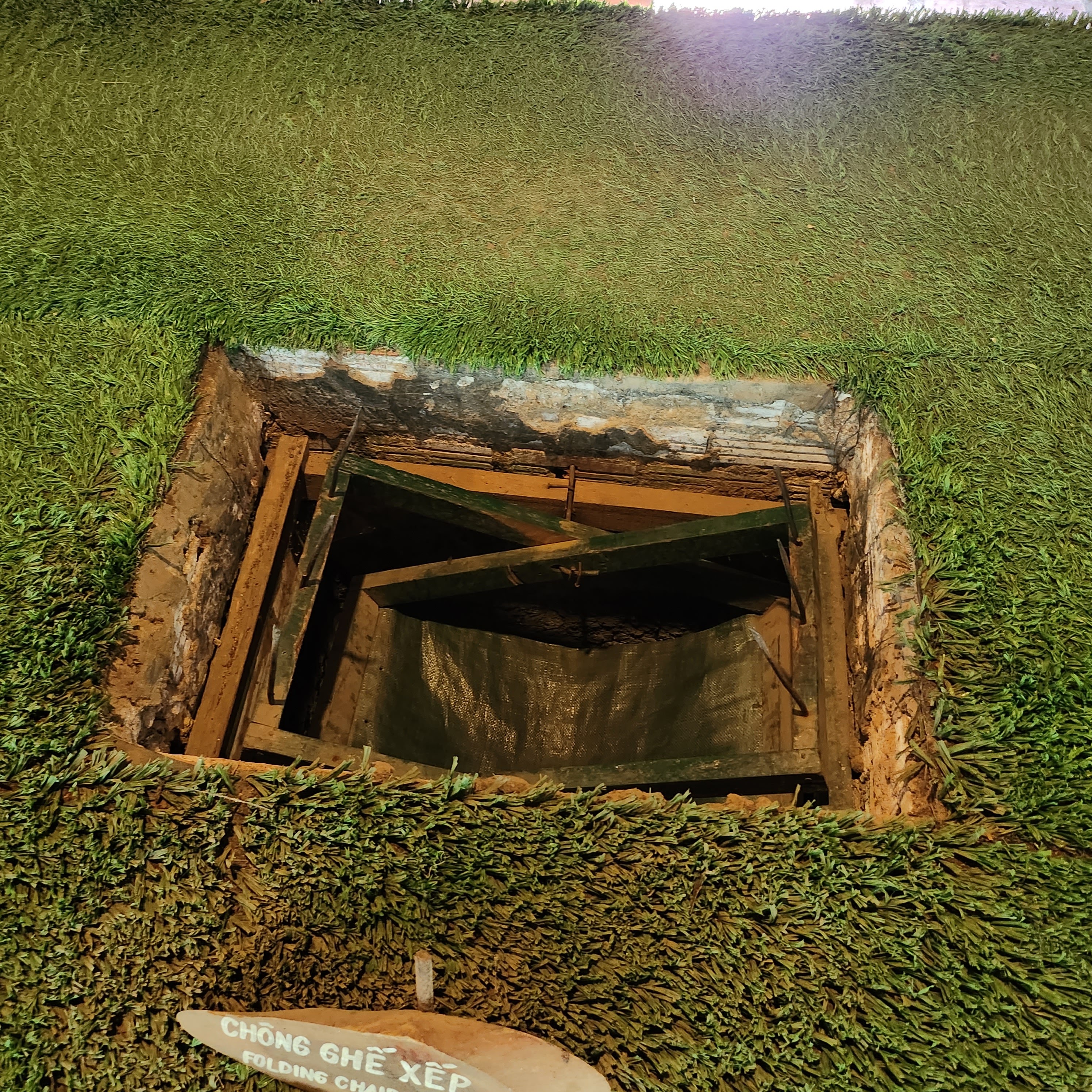
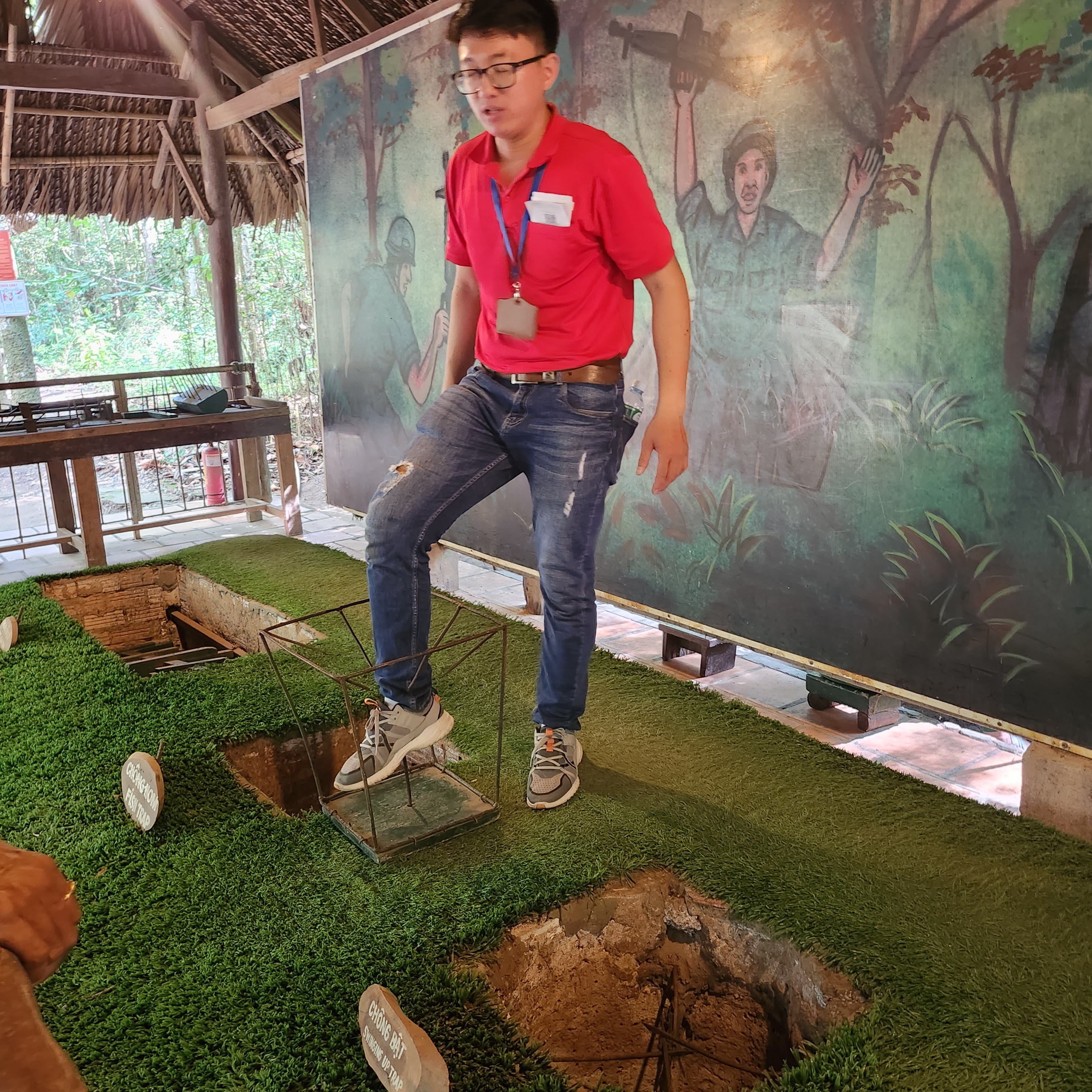
There are many stories about how the guerilla fighters foiled the U.S. in all their attempts to shut down activity in the tunnels. I will spare you the details of what they did to all the German Shepherd dogs we brought.
Reunion Time
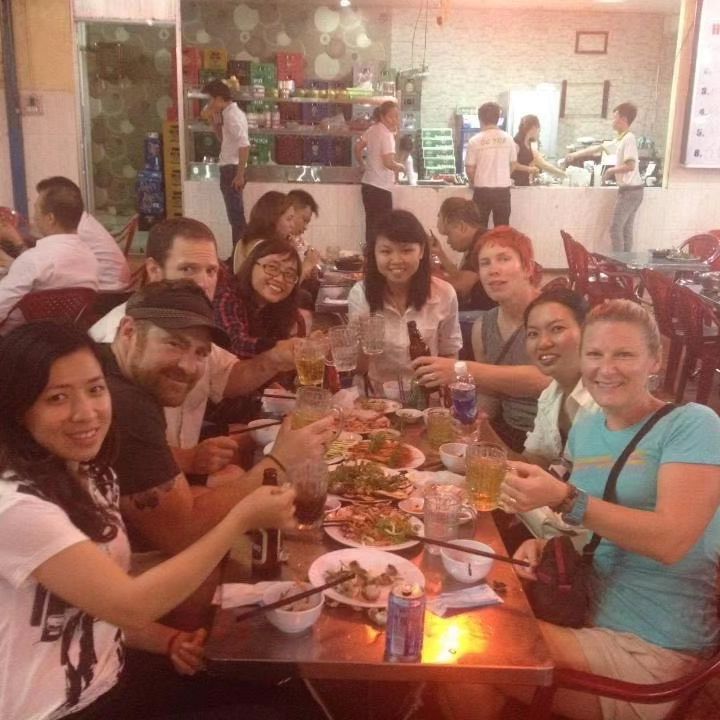
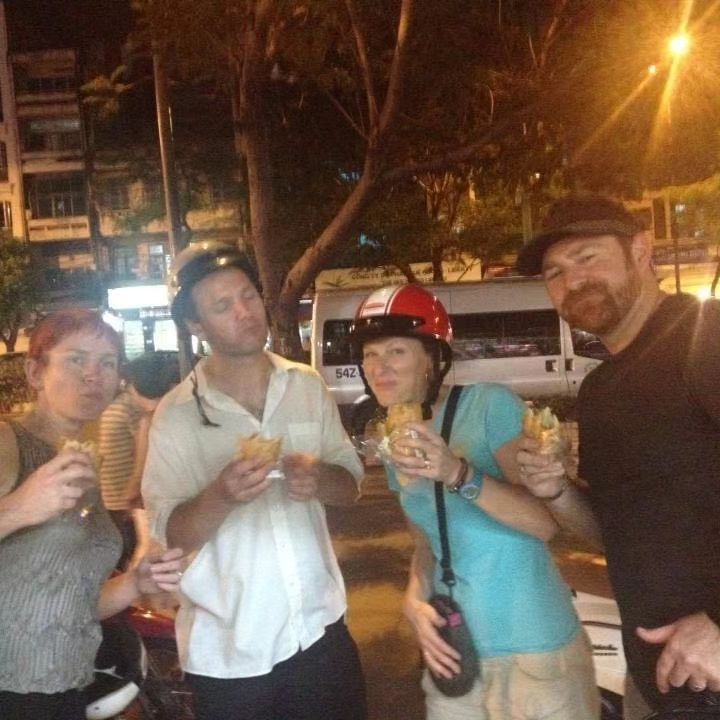
The last day in Saigon, we met Vi for lunch. Vi was our tour guide when we came to Vietnam 10 years ago. We stayed connected on Facebook. The tour was a motorbike food tour, which back then was a bit of a novelty. Nowadays, everyone and their mom is running some kind of food tour. Zooming around on the back of a motorbike being driven by a tiny 22 year-old woman with our friends is a big reason why we loved our visit to Vietnam so much.
Vi no longer runs tours, she’s on to bigger things like partnering with a former client from America to invest in real estate in Saigon. She runs a habanero hot sauce company, mostly through ecommerce. She also hosts couch surfers and cooking classes in her home for free. This lady is an entrepreneur and smart businesswoman.
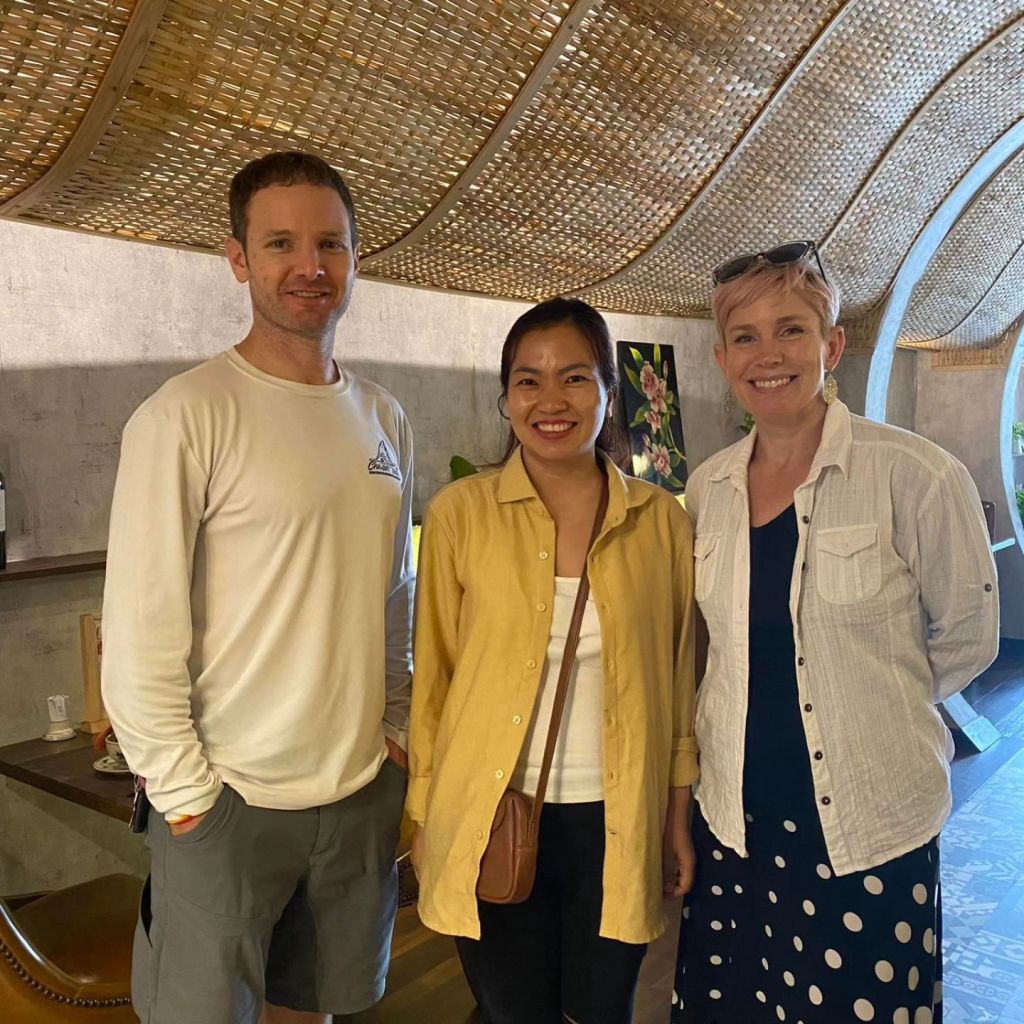
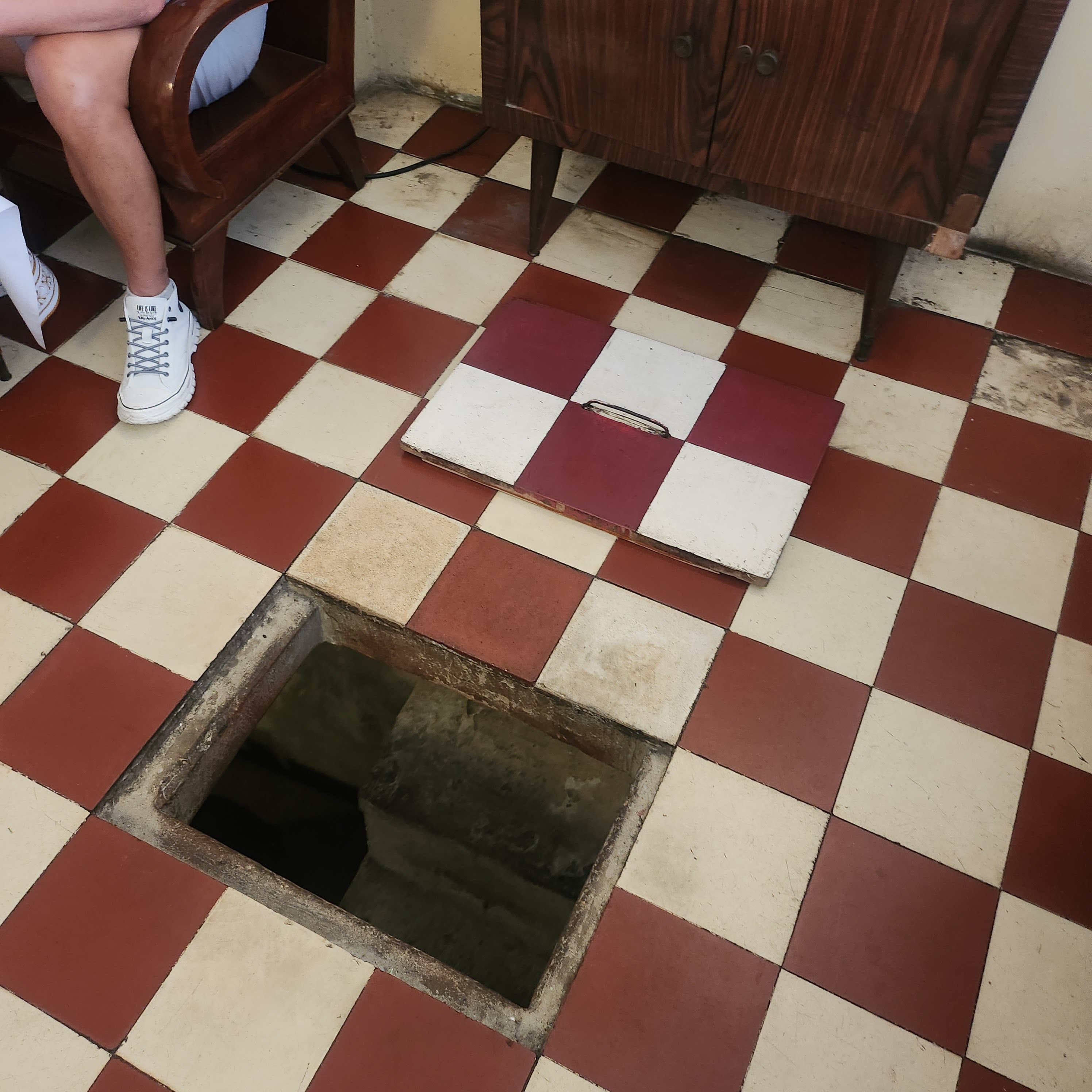
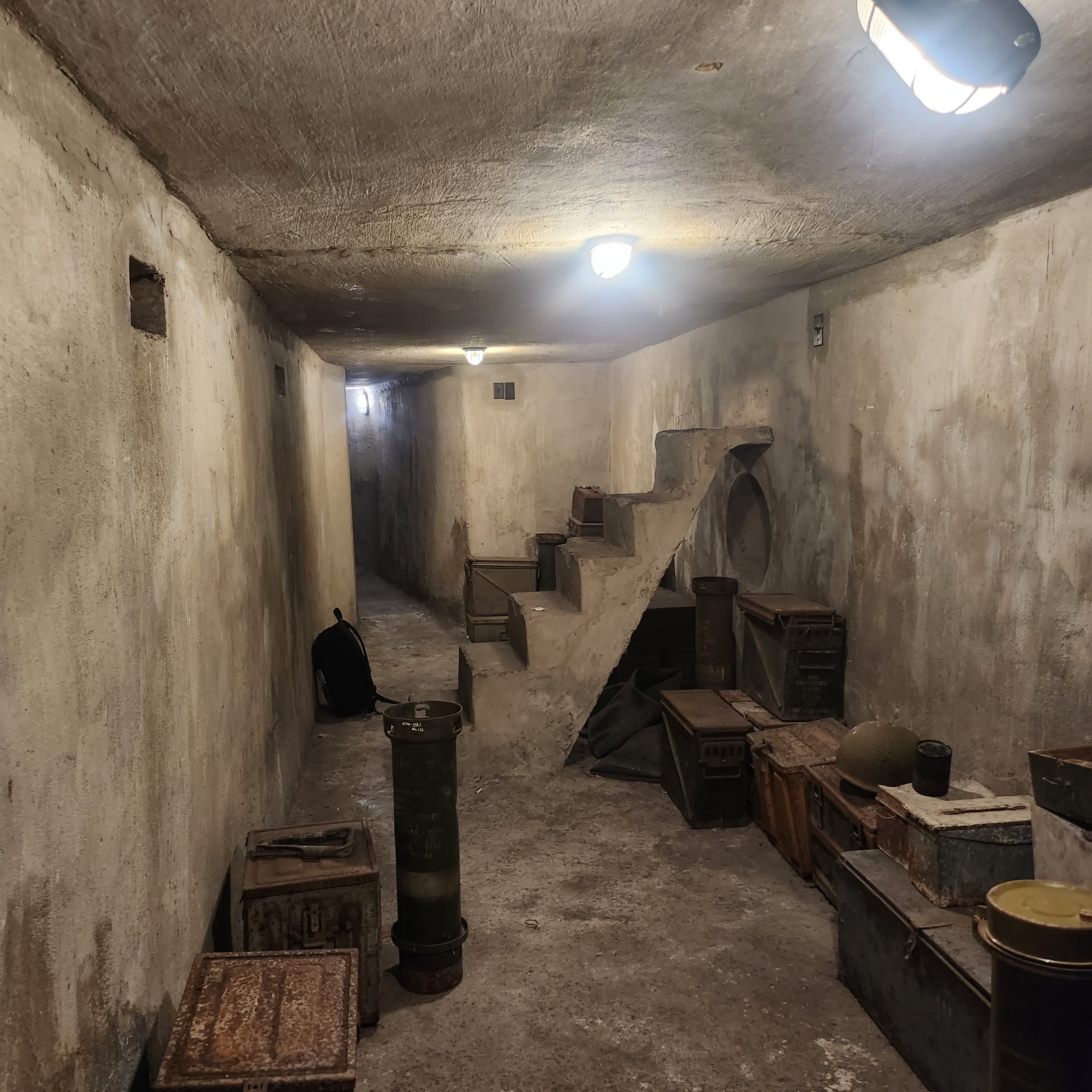
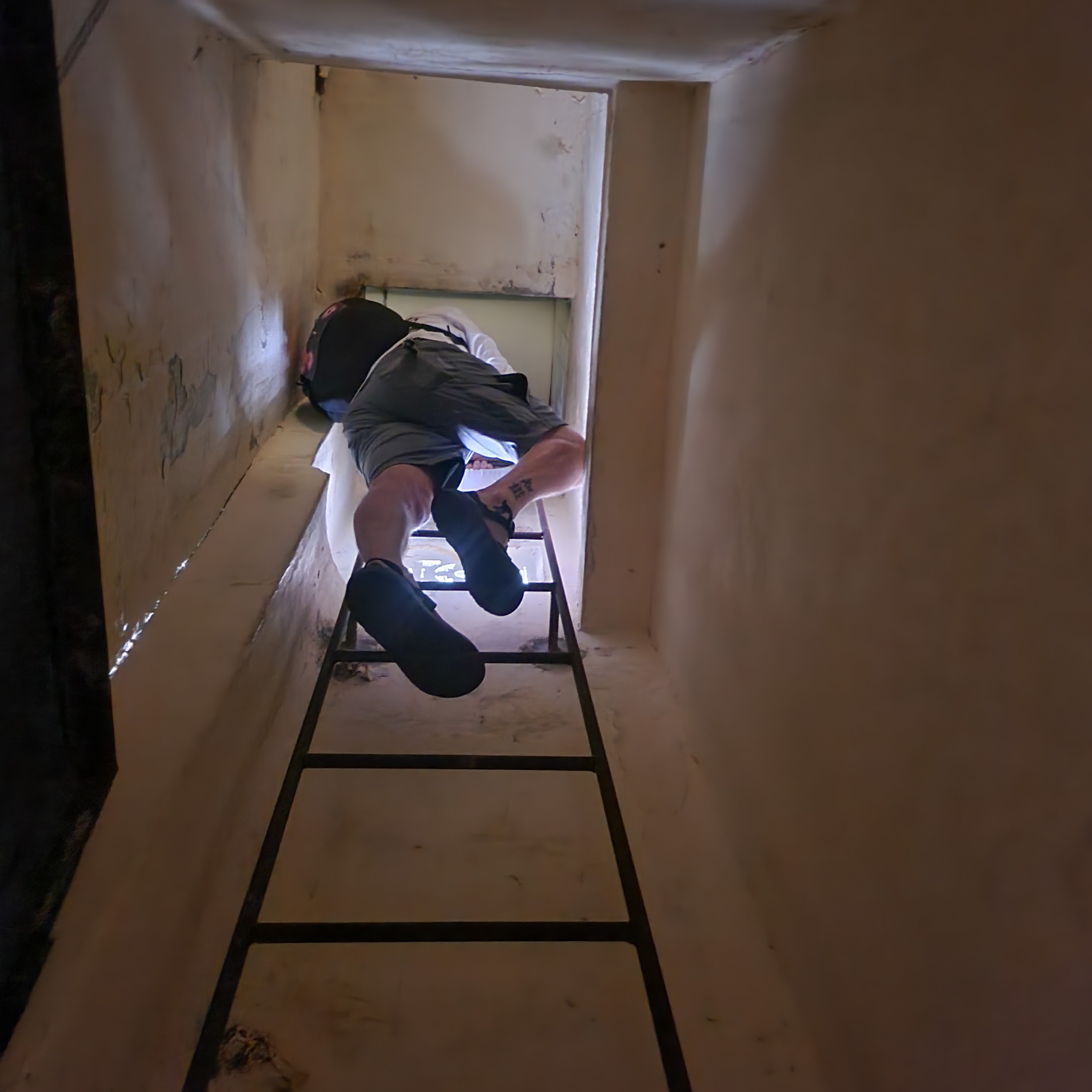
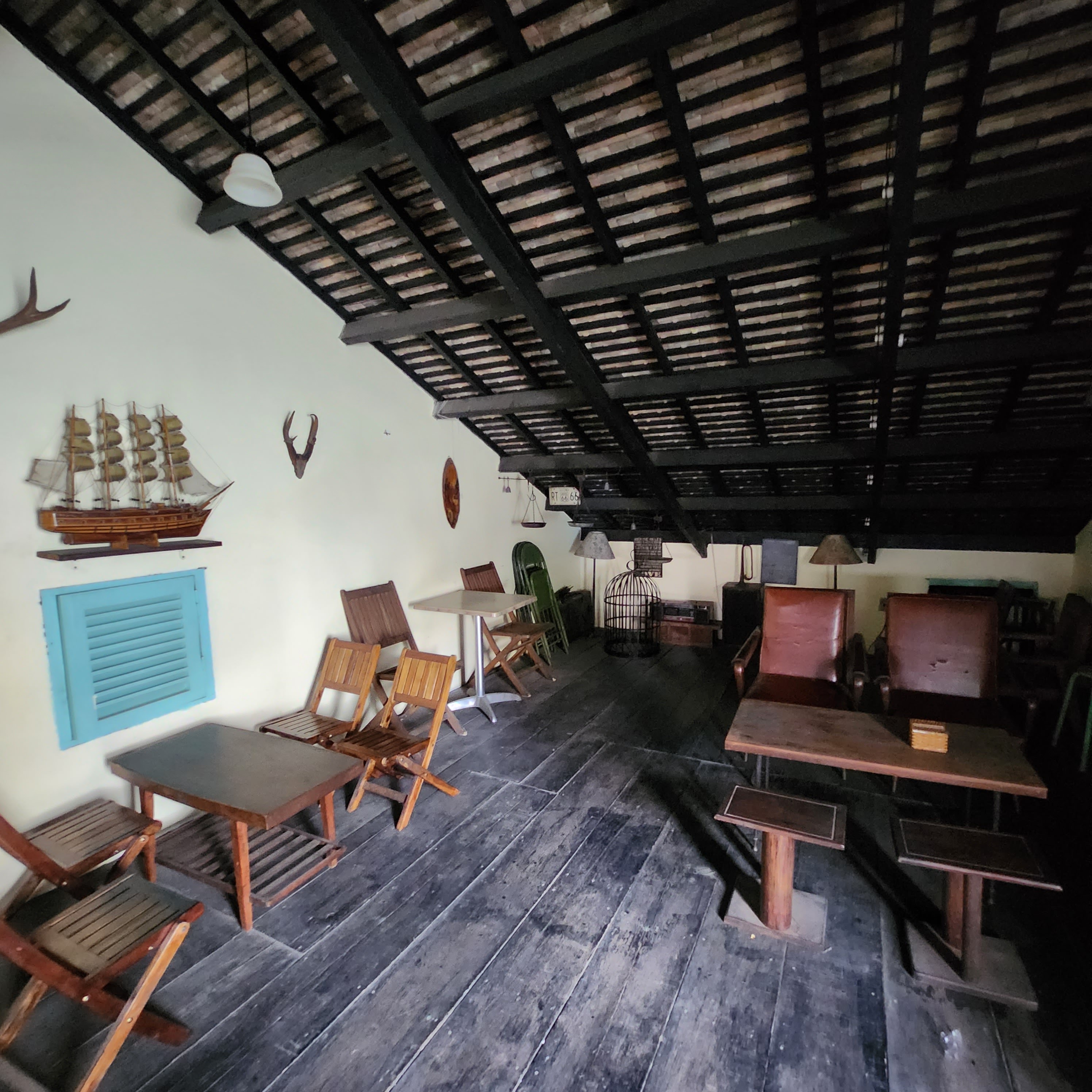
After lunch, she took us to a cafe that had been kind of a hiding house for guerilla fighters. The floor had a small trap door that led into a basement and tunnel to the back of the building. From there, a ladder took you up to the second floor, the living room, and then another set of stairs took you up to the 3rd floor where you could escape out the balcony and run to the next building.
Because we were with Vi, we could experience the entire escape route (except for jumping from the top balcony to the neighbor’s roof). She came up to the floor to unlock the little doors at the top of the secret ladder for us. We emerged from the cabinet underneath the bathroom sink. She informed us that there was a guy in the adjoining bedroom taking a nap. We found some poor old guy laying on his bed, probably a little confused about why these white people are crawling out from his bathroom sink. But, maybe that’s just part of the biz and it happens all the time.


Saigon
For our final night in Vietnam for a while, Josh and I went out for a light dinner, and walked through the “entertainment district.” Saigon is known to be more liberal than Hanoi, and here’s where it was most evident. The street pulsated with loud music and lights. Cute little Asian girls with enormous nitrous balloons and empty eyes slumped in booth benches on the sidewalk.
A beautiful woman in an Ao Dai standing on the street was flirting silently with just her facial expressions and eyes with men on the 2nd story balcony of a bar. People tried to usher us into their establishment by standing in our way, with arms gesturing towards the door, and making big promises about having a great time. It’s the kind of place that you could easily disappear into, and it felt like it had always been that way since the opium dens. But, we don’t know a lot about it, so maybe it’s new, but it had a timeless wild and seductive feeling.
 Casey Space
Leave a comment